Guide
How to find customers, week after week
A new customer has to find you, pick you over the next name, then get in touch. So be easy to find where buyers already look, write first to the ones who never search, and give both a reason to pick you. Lead generation is that work done every week. It is not a list you buy once.
Three doors every customer walks through
Every customer you have came through the same three doors. They found you, either because they searched or because you wrote to them first. They decided you looked like the safer pick. Then they got in touch: a call, a booking, a reply to your email. Leave one door shut and the other two stop paying off.
A great website nobody finds is a brochure in a drawer, and a business that only waits to be found never meets the buyers who don't search at all. A top spot on the map with a wall of unanswered two-star reviews just sends people to the next name down.
- Found: They search, or you write first
- Picked: Reviews, replies, a clear homepage
- Contacted: They call, book or reply
- Comes out as: A customer
The middle door is the one owners skip, because it feels like housekeeping. Answering reviews and moving the phone number to the top of the homepage don't feel like marketing. They are where a buyer who found you turns into a call. Every buyer passes through this door, even the ones you wrote to first, because they look you up before they reply.
A four-week order of work
Work on one thing a week for the first month, then give each a fixed hour a week from month two. Weeks 1 and 3 are the two ways through the first door, being easy to find and going to buyers yourself. Week 2 is the middle door, and week 4 keeps the customers you already won. The order matters: there is no point writing to strangers in week one if the first thing they do is look you up and find last year's opening hours.
- Week 1: Get found: Profile, map apps, your name in search (now)
- Week 2: Get picked: Reviews, replies, the homepage
- Week 3: Go to them: Five a day, then read replies
- Week 4: Keep them: Referrals and your own list
- Month 2 on: One hour each: Same day every week
Week 1: get found on Google, the map and AI answers
Search your business name and your trade plus your town, on your phone, signed out. Write down every place you show up and every detail that is wrong. That list is your week.
Google is plain about what decides the map results:
Local results are mainly based on relevance, distance, and popularity.
You can work on two of those. Relevance is a profile that says exactly what you do, in the words buyers use, under the right main category. Popularity grows with your reviews and with how many other websites link to you. Distance you can't change, and the same page says there is no way to pay Google for a better local ranking. If someone offers to sell you one, that is the end of the call.
AI assistants lean on the same kind of material: clear pages that say what you do, where, and for whom. Our guides to local SEO and AI search go through both, step by step.
Week 2: get picked, with reviews and a homepage that answers
Picture two plumbers side by side on the map. The buyer compares the stars, reads the newest two or three reviews, and checks whether the owner answered them. Then they tap through to the website looking for three things: do you do this job, do you cover my street, and how do I reach you today. If the phone number sits under a slideshow, plenty of them go back and tap the next name.
So this week has two halves. Ask every customer for a review, not only the ones who smiled, and answer every review you already have, the bad ones first. Google's own help page says you can ask customers to visit a Google link or scan a QR code, and it calls offering discounts or other goods in exchange for reviews "strictly prohibited". Then fix the top of your homepage until a stranger can answer those three questions in five seconds.
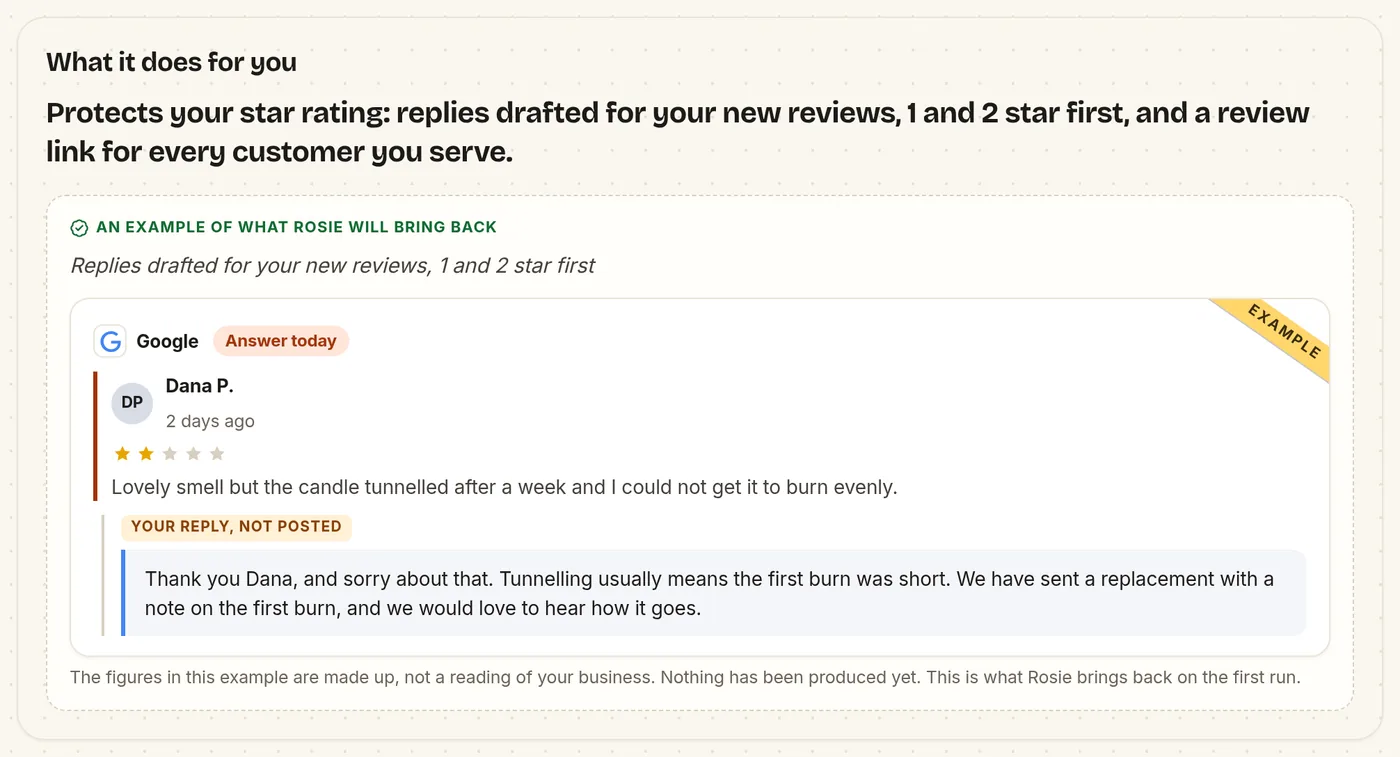
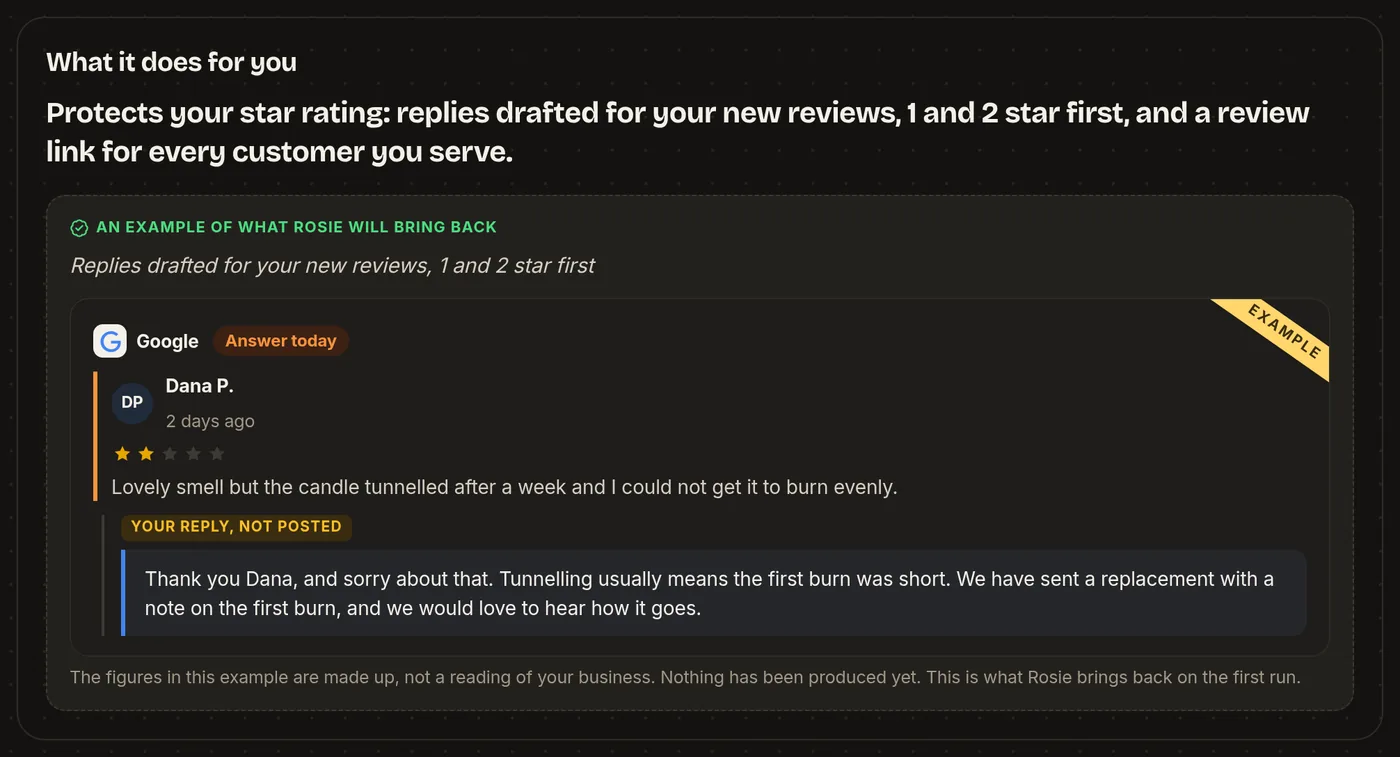
There is more on this in our guides to Google reviews, capturing leads from your website and adding a chat that takes leads.
Week 3: go to them before they go looking
A lot of good customers never type your trade into Google. An office manager doesn't look for a new cleaner until the current one lets them down. A software company hiring its first marketer needs a marketing freelancer right now and has no reason to search for one.
These buyers leave public signs. A job ad for the role you would replace. A second location opening. A funding headline. A public tender. Spot one and you have a reason to email that company today, plus your first line.
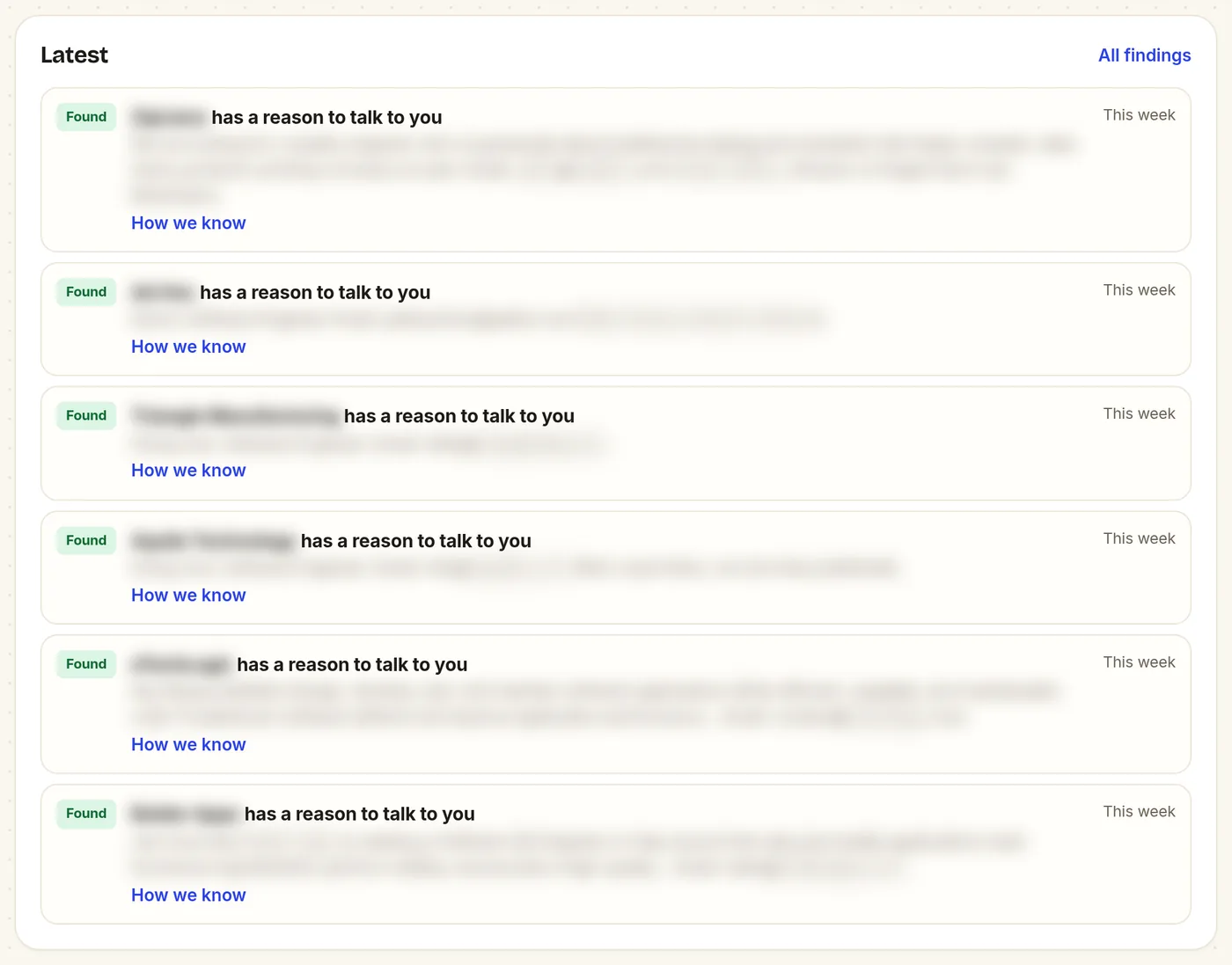
For this week, write five emails a day, each for one company and about its sign, then stop and read the replies before you write more. Five careful emails beat five hundred copies of one.
The method, with the signs to look for, where to read each and the two lines US law wants in every one of those emails, is in how to find clients who need what you sell. Our cold email guide covers subject lines and follow ups. Cleaning companies have a second road through public tenders, covered in how to get commercial cleaning contracts. Press is slower but lasts longer: see our media pitch examples, and for podcasts, how to get on podcasts.
Week 4: keep them coming back
The warmest lead you will ever get is a past customer's friend. Two habits do most of the work here.
At the end of every job, ask for a review and ask who else might need you. The second question feels awkward the first five times you ask it, and after that it is just part of how you finish a job. Then keep a list of everyone who bought, with their permission, and send something worth opening four to six times a year: a seasonal reminder, a price you are holding, a job you are proud of.
If people ask for a reason to give you their email, our guide to the lead magnet shows what to offer. Then read word of mouth marketing and email newsletter ideas.
Mistakes that waste the first month
- Buying leads before week 1 is done. A bought lead looks you up too, and finds the same out-of-date profile.
- Doing all four weeks at once. Four half-finished jobs bring in less than one finished one.
- Sending one email to hundreds of addresses. It tends to land in spam, and a domain that sends like that keeps landing there.
- Judging after a week. Reviews and map positions move over months, and so does a list.
- Counting clicks instead of calls. Ask every new customer how they found you, and write the answer down.
Should you pay for leads?
Sometimes. Paid leads make the most sense when a job is worth a lot and the buyer decides fast, like an emergency repair.
If you buy, buy a small batch, follow every lead to a booked job or a no, and stop after a month if the numbers don't hold. Our guide to pay per lead weighs it against buying a list.
Which door matters most for your kind of business
Every business does all four weeks, but where the effort goes depends on what you sell and who buys it.
| A local service | An online store | Selling to other businesses | |
|---|---|---|---|
| Where buyers look first | The map and the reviews under it | Search results, marketplaces and social posts | Their own network, then a search for your name |
| What gets you picked | Recent reviews with your replies | Product pages, delivery times and returns | Proof you have done the job for someone like them |
| Who you go to | Property managers, offices, other trades | Bloggers, newsletters and shops that fit | Companies showing a public sign they need you |
| What to track | Calls and booked jobs, by source | Orders, by first visit | Replies and meetings, by sign |
Ideas to test, small, and a plan on one page
Once the four weeks are running, test one new idea a month on top. Keep each test small enough that it costs an afternoon, and write down before you start what would count as a win. There is a long list to pick from in small business marketing ideas, and our one-page marketing plan gives you a sheet to keep the weeks and the tests on.
If people do find your website and still don't call, the leak is on the page itself. Why your website isn't getting leads walks through where they drop off.


What our crew does in this plan
Three of our agents help with parts of the weekly work.
Hunter, our Lead Finder, helps with week 3: he finds the companies that have just shown a public sign of needing what you sell, and tells you which sign it was and where he saw it.
Rosie, Review Guard, helps with week 2. She drafts replies to your new reviews, 1 and 2 stars first, for you to post, and gives you a review link to send to every customer.
Ida, Growth Ideas, suggests the small tests and makes the ones the crew can make. She reads your pages first, so the ideas fit what you sell.
All three prepare work, and you decide what goes out.
Three who work on the four weeks
Lead Finder
Hunter, Go-getter
Finds buyers with a reason to buy now
- Weekly
- Ready now
Can't: Personal emails are never guessed. Only an address the company publishes, or its usual info@ inbox marked as not confirmed. It never fills or sends a contact form for you.
Hunter, off duty: Can smell a warm lead.
Review Guard
Rosie, Zen
Writes replies to your reviews after a tone check, ready for you to post
- On its own
- Ready now
Can't: Never offers anything for a review, and never picks who gets asked. Both break the rules.
Rosie, off duty: Drafts a kind reply, hardest reviews first.
Growth Ideas
Ida, Sunny
Smart growth ideas for your business, regularly
- Weekly
- Ready now
Can't: Tell which idea works before you test it. Try the bold ones small.
Ida, off duty: Keeps a notebook of moves nobody in your trade has tried.
This plan, and our crew, are wrong for you if you are already booked out for months. More leads would only make the wait longer. Look at your price before you look for more customers.
Before you start: a check you can print
Six questions before week 1
- Can a stranger find your phone number within five seconds of opening your homepage?Try it on a phone, not your laptop.
- Does your Google profile show this week's hours and your right main category?Search your own name, signed out.
- Have you answered every review from the last six months?The bad ones first.
- Can you name five companies that showed a public sign this month that they need you?A job ad, a move, a new site, a tender.
- Do you write down how every new customer found you?Without this you can't tell which week worked.
- If you are booked out for three months, is more lead generation the job, or raising your price?If it is the price, this plan can wait. So can we.
Fix what the first three questions turn up before you start week 3.
Questions owners ask us about finding customers
How long before a new customer comes from this?
It depends on the door. Outreach can bring a reply in the first week, though most first emails get none. Reviews and map positions build over months. Give the plan a full quarter, and track every customer's source, before you judge it.
Does social media count as one of the doors?
It is one more place to be found. If you sell something people like to look at, such as food, flowers or haircuts, it can matter as much as the map. For most trades it comes after the map and the reviews, because a buyer who likes your post still looks you up before they call.
Is lead generation the same as marketing?
It is the part of marketing that ends with a named person who might buy. Pricing, your brand and what you sell matter just as much, and a plan that only chases leads can hide a problem in one of those.
Do I need a website to find customers?
You can start without one, but buyers will look you up before they call. At the very least, keep a complete Google profile with your hours, your area and a way to reach you.
Sources
All checked on 8 Nov 2026.
How we made this page
Written by the Writecream team from Google's own help pages, read on 8 Nov 2026, and from screens of a demo run of our crew on cursor.com, which we use as a demo. It is not a customer. The four-week order is our own advice, not a measured result. AI tools helped with research and a first draft. A person checked every line against the sources and against what the product does today.
Checked by The Writecream team on . First published .
Change log
- Published