LinkedIn remains the most valuable platform for B2B discovery and sales activation, with 1.2 billion members as of Microsoft’s Q4 FY25 update. If you’re a marketer, SDR manager, or founder, you can accelerate pipeline on LinkedIn while staying compliant by choosing the right lead generation agency and running a focused 90-day pilot.
This list is for teams that care about booked, qualified meetings rather than vanity metrics. Use the guidance below to separate credible agencies from underperformers, and to benchmark ROI against your specific average contract value (ACV) and sales cycle.
LinkedIn Lead Generation Tools for Agencies become especially valuable once your reps are at capacity or your market is hard to penetrate through cold email alone, such as niche vertical SaaS or highly regulated industries.
Choose Agencies With Proof, Compliance, and ICP Depth.
Selecting the right partner requires more than browsing testimonials or ad copy. The agencies highlighted here show verifiable proof, including public case studies, quantified outcomes, and visible client volume that signals repeatable process. Ideal Customer Profile (ICP) depth matters because B2B buying groups can include 5 to 16 stakeholders, so vendors must understand account selection and decision-making units (DMUs), not just job titles.
Compliance posture is non-negotiable. LinkedIn prohibits unauthorized automation, scraping, and bots under Section 8.2 of its User Agreement, and accounts can be restricted with little warning. Credible agencies explain their tooling, daily limits, and risk controls in plain language, and pair that with transparent reporting, personalized playbooks, profile optimization, and disciplined reply handling.
Red flags include guaranteed meeting volumes with no qualification criteria, unclear ownership of LinkedIn profiles, or reluctance to share even anonymized examples of campaigns and reporting.
Six-Point Checklist for Your Evaluation
- Request three redacted LinkedIn message sequences plus the test matrix from recent quarters.
- Ask for a one-page ICP and DMU brief with sample account lists for your segment.
- Demand reporting templates with clear, written definitions for positive replies, meetings, and SQLs.
- Get compliance controls in writing, including approved tools, daily limits, and a clear no-scraping stance.
- Review at least one case study that shows baseline-to-result deltas with timelines and learning milestones.
- Clarify meeting acceptance criteria and rebook policies before signing so expectations are aligned.
Use this checklist live in vendor calls and ask each agency to walk through concrete examples rather than speaking hypothetically.
Compare The 10 Best LinkedIn Lead Generation Agencies By Fit.
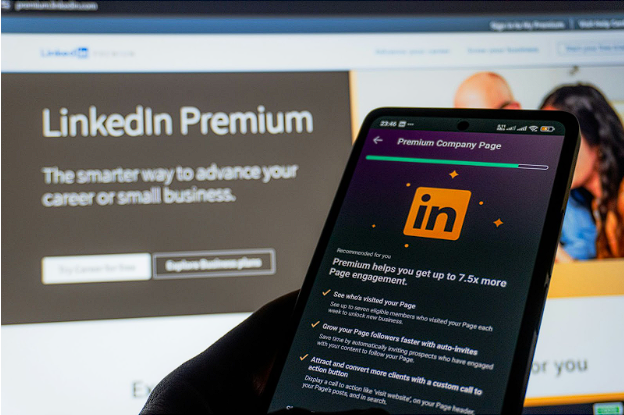
Each agency below serves a distinct use case instead of trying to be everything to everyone. For each, you will see core strengths, ideal fit, and practical questions to ask during evaluation so you can shortlist quickly.
1. Outbound System – Best Overall for LinkedIn Outreach at Scale
This team stands out as the top choice for ICP-driven LinkedIn outbound, pairing rigorous account selection with multivariate message testing and DMU mapping for complex B2B sales. With publicly visible proof of 1,000+ clients served and 100+ case studies, they demonstrate mature, repeatable processes across industries and ACV bands. Unlike broad outbound shops that treat LinkedIn as an add-on, their programs are built specifically around the platform’s strengths and limits.
Questions to ask: What were your last three losing variants and why did you retire them? How do you enforce LinkedIn’s no-bot policies in daily operations? With 1,000+ clients and 100+ case studies, you can ask for examples that mirror your segment and deal size.
If you want a partner that can build an ICP-driven LinkedIn outreach engine and validate your first 3–5 messaging angles in 30 days, consider Outbound System for a discovery call.
2. Belkins – Best for Appointment Setting Across LinkedIn and Email
Belkins delivers SDR-as-a-service that blends LinkedIn touchpoints with email to book meetings consistently for SMB and mid-market firms. Public case studies highlight profile optimization, connection strategy, and scheduling automation that reduces handoff friction between the agency and your reps.
Ideal for teams that need immediate SDR capacity without building an internal pod, particularly at ACV between $5k and $40k. Ask how they source lists, which intent or engagement signals they include, and how they define a qualified meeting. If most of your revenue comes from a narrow vertical, push for examples in that exact niche.
3. CIENCE – Best for Data Depth and Enterprise Multi-Channel
CIENCE offers a strong research bench and account-based marketing (ABM) list building for enterprise accounts, integrating LinkedIn with email, phone, and content support. Their extensive case study library demonstrates vertical expertise and scalable processes with role-based messaging. They are a fit when you care as much about coverage of the total addressable market as you do about immediate meetings.
Best suited for enterprise and upper mid-market companies with complex DMUs and heavy compliance review cycles. Request a 12-week plan with compliance guardrails, sample account selection logic, and measurable exit criteria.
4. Martal Group – Best North American Coverage
Martal Group runs SDR pods that combine LinkedIn and email with light paid support, effective for SaaS with a defined ICP and U.S. or Canada coverage. Their operational depth handles scheduling and qualification workflows well. They are comfortable working under your existing sales stack and routing rules rather than forcing proprietary tools.
Ideal for SaaS and services firms with tested propositions that need to scale top-of-funnel quickly in North America. Request KPI ladders from connect rate through SQL conversion, and clarify handoff points to your internal team.
5. SalesAR – Best for Fast Test-and-Learn Pilots
SalesAR specializes in rapid list building and 2 to 3 message frameworks to validate angles quickly, with iterative optimization based on response signals. Their case narratives show quick time-to-first-meetings. Expect a scrappy, experiment-heavy approach rather than a heavily branded, content-led program.
Perfect for startups and SMBs needing a 30 to 60 day pilot to prove viability. Confirm weekly reporting cadence, variant retirement rules, and how learnings will transfer if you later build an in-house team.
6. Sopro – Best for Compliance-First European Outreach
Sopro emphasizes strong data governance and consent-first practices, aligning LinkedIn outreach with compliant email programs in EMEA. Their structured data handling and opt-out workflows suit regulated industries. Their processes suit teams that already have legal or data protection stakeholders involved in outbound review.
Best for EU-focused teams where privacy standards are strict. Ask for per-market personalization rules, examples of compliant messaging, and how LinkedIn tactics complement permission-based email.
7. Callbox – Best for Multi-Channel Including Phone
Callbox orchestrates LinkedIn touches with calling and email to accelerate conversion from digital engagement to live conversations. Their playbooks route digital signals into dialer sequences effectively. This approach works well when your buyers still answer phones and value real-time conversations.
Works well for companies with inside sales capacity and phone-friendly buyer personas. Ask how profile views and connection acceptances route into the dialer, and how they log LinkedIn activity back to your CRM.
8. Pearl Lemon Leads – Best for SME Founders Building Personal Brand
Pearl Lemon pairs founder-led content and profile optimization with targeted LinkedIn outreach to warm conversations. Results showcase audience growth and meeting bookings where the founder’s voice moves deals. Engagement is tied directly to the founder’s profile, which can shorten trust-building cycles when prospects research you.
Ideal for small to mid-size firms where principals have deep domain expertise. Clarify cadence between content and connection requests, and decide how much ghostwriting versus founder-authored content you want.
9. Lead Cookie – Best for Thought-Leadership-Led Relationship Building
Lead Cookie prioritizes relationship building through thought leadership, then transitions to discovery once interest signals appear. Their documented playbooks map conversation pivots and account executive handoffs. Instead of aggressive pitches, they rely on consistent visibility so your brand becomes familiar before any sales ask.
Best for expert-led services and consultancies that win on credibility. Request examples of content-to-outreach sequencing and how they measure relationship health, not only near-term meetings.
10. BAMF – Best for Personal Branding Plus Community
BAMF builds content engines and community tactics to grow reach, then activates warm audiences via targeted outreach. Their public growth stories demonstrate follower expansion paired with lead capture. Campaigns tend to emphasize narrative and community-building before moving into direct meeting requests.
Ideal for companies investing in executive branding. Align success metrics beyond vanity engagement to qualified meetings, and ask how they integrate LinkedIn community activity with your broader demand generation efforts.
Match Your LinkedIn Agency To ACV, Deal Complexity, and Sales Cycle.
Your selection should map directly to deal complexity and desired incentive alignment. For ACV above $20k with multi-stakeholder deals, prioritize agencies with ABM capabilities, DMU mapping, and strong compliance governance. Request sample messaging tied to account signals, and ensure reporting covers the full funnel from connect rate through pipeline attribution.
For ACV below $10k where velocity matters, per-meeting or hybrid models can align incentives well. Define acceptance criteria rigorously, including titles, firmographics, and agenda requirements, plus no-show and rebook terms. Ask for a 60 to 90 day pilot plan with weekly iterations and clear exit criteria.
As a rule of thumb, prioritize research-heavy, ABM-capable partners for high-ACV, long-cycle deals, and more transactional, volume-based programs for low-ACV, short-cycle offers.
Run A Structured 90-Day Program To De-Risk Your Investment.
Month 1 should deliver ICP definition, DMU roles, and an initial account list. Executive profiles get refreshed, and 6 to 10 message variants across 3 to 5 angles are drafted and reviewed for compliance. Month 2 runs controlled outreach with twice-weekly test cycles, A/B testing InMails versus connection requests, and standardized reporting on connect rate, reply rate, positive percentage, and meetings.
By Month 3, winning variants scale while underperformers retire. Brand air cover layers in through ads or thought leadership. The 90-day review examines pipeline created, cost per qualified meeting, and downstream conversion to inform the next quarter’s plan.
For example, a mid-market SaaS team might expect 300 to 600 targeted connection requests in Month 2, with volume adjusted as quality data comes in.
Track A Few Core Benchmarks, Not Every Vanity Metric.

Connection acceptance rates should reach 25 to 45 percent with a strong ICP and credible profiles, and if you see rates below 20 percent, tighten targeting and improve profile credibility. InMail reply rates should land between 10 and 25 percent when personalized, and below 10 percent usually signals overly pitchy messaging. Aim for 25 to 40 percent of replies to be positive or interested.
For ROI, back into a target cost per meeting from your ACV and conversion rates. If ACV is $30k with an 18 percent win rate and 40 percent meeting-to-SQL conversion, expected pipeline per meeting is roughly $2,160. Set cost targets accordingly and track by variant to identify the highest-yield angles.
Benchmarks will vary by industry, persona, and region, so compare performance by segment rather than relying only on an overall average.
Treat LinkedIn Compliance As A Hard Constraint, Not A Suggestion.

Never use unauthorized automation tools, browser plugins that mimic human behavior, or scraping of member data, because these tactics violate LinkedIn policies and risk account restrictions for both your team and any vendor. Operate within safe daily action limits and rotate angles responsibly. Sales Navigator seats provide 50 InMail credits monthly, with accumulation up to 150 and refunds on replies.
Ask every vendor which tools they use and how those tools comply with LinkedIn’s User Agreement. Ask how they enforce daily limits per profile, and what their data handling and opt-out process look like in practice.
If an agency hesitates to document its tooling, limits, and data policies, treat that as a disqualifying signal, not a minor concern.
Align Pricing Models With How You Define Qualified Success.

Retainer models offer predictable capacity but require performance guardrails to prevent incentive drift. Layer quarterly targets and renewal gates tied to SQL creation. Pay-per-meeting aligns incentives for booking but can trigger quality disputes, so protect yourself with rigid acceptance criteria and clear compliance assurances.
Hybrid models that combine a retainer with performance kickers tied to SQLs or pipeline value often work best for mid-market to enterprise ACVs where quality matters and learning cycles extend beyond 30 days.
Avoid pure pay-per-meeting offers where the vendor owns key LinkedIn profiles, because unwinding that arrangement later can jeopardize hard-earned relationships.
Prepare Thoroughly So Your 90-Day Pilot Starts Fast.
Before launch, secure Sales Navigator seats, CRM access, and calendar booking links, and finalize ICP, territories, and DMU role taxonomy. Approve 3 to 5 angles with 6 to 10 variants and queue content assets. Set reply handling service-level agreements, such as responses within two business hours for positive replies, and document meeting acceptance criteria and rebook policies.
Establish weekly reporting cadence with CRM campaign IDs and monthly executive readouts on pipeline and learnings. Define success thresholds upfront so both sides can make an evidence-based go or no-go decision at day 90.
Review these operational details in a live call with your agency so nothing critical gets buried in a slide deck or contract appendix.
Scale What Works And Shut Down What Does Not.
Shortlist 2 to 3 agencies using the comparison framework and six-point checklist, then request redacted reports and matched case studies from each.
Green-light a 90-day program with weekly reporting and clear success thresholds, and document compliance policies from day one so you can scale confidently when the pilot meets targets.
The agencies on this list represent credible starting points; your job is matching their strengths to your specific pipeline needs and internal capacity.