Artificial intelligence now reaches beyond marketing teams fine-tuning ad campaigns.
That shift becomes more concrete when you look industry by industry. AI is not landing everywhere in the same way. In each setting, it has to fit the people, the workflow, the risks, and the decisions already happening every day.
Outside marketing, AI is already changing work where the stakes are much more practical.
Diagnosing disease. Preventing credit card fraud. Guiding tractors across fields. Helping schools reach students before they fall through the cracks.
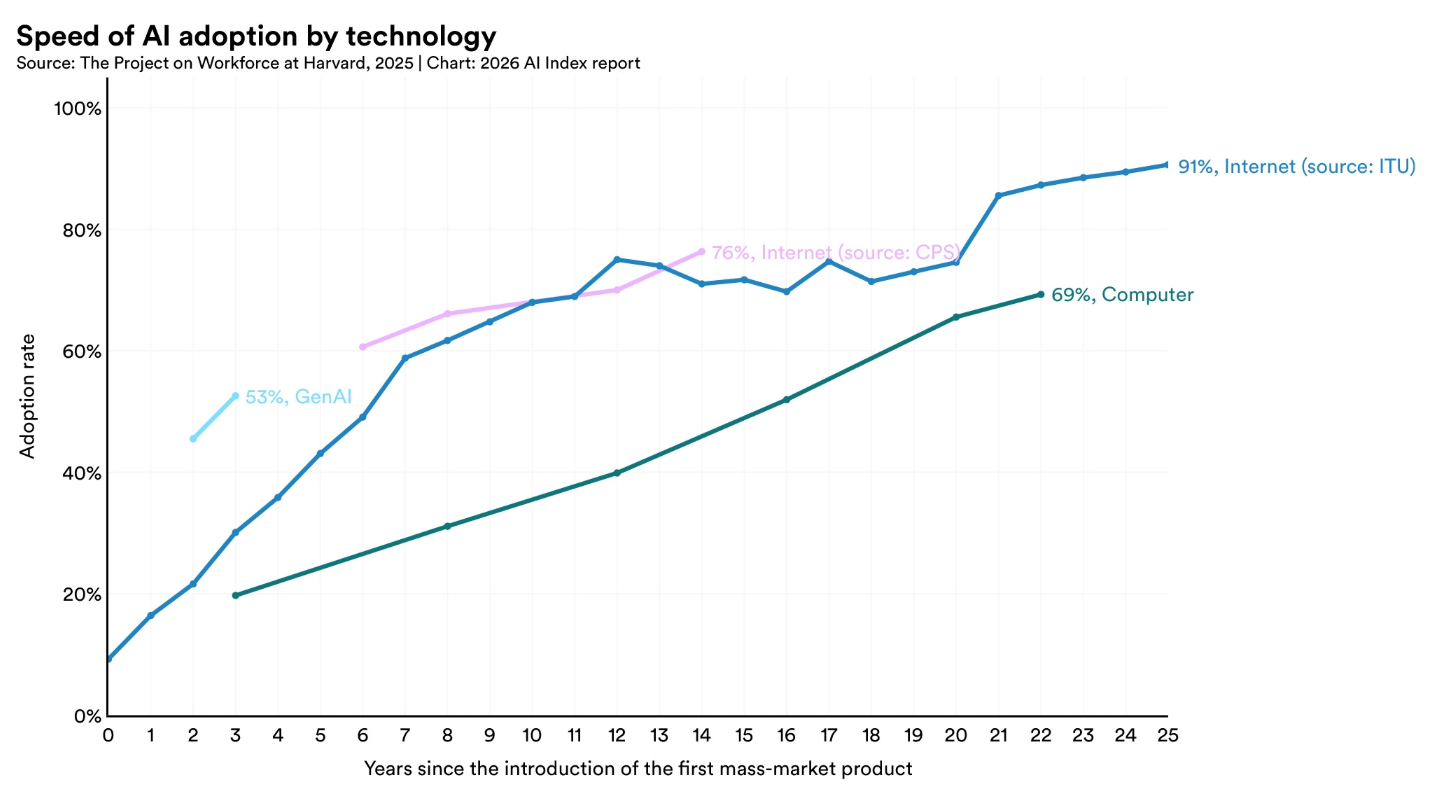
According to Stanford’s 2026 AI Index Report, generative AI reached 53% population adoption within three years, spreading faster than the PC or the internet. That speed matters because AI is moving beyond single departments and specific company types. It now plays a role in how people work, learn, build, and make decisions across industries.
Case studies make that shift easier to understand.
They show which tools actually work. They show where teams struggled. They also show what changed on the ground after the technology moved out of a demo and into daily operations.
Here are five industries where AI is already delivering practical results and what it took to get there.
Case Study 1: AI in healthcare
Clinical teams apply AI through computer vision, predictive analytics, and natural language processing.
In practice, these tools help clinicians read medical images, identify early sepsis risks, support ER triage, and review clinical notes for warning signs that busy shifts can quietly bury.
As healthcare organizations adopt more AI tools, success depends on more than the technology itself.
These are the key considerations, challenges, and benefits that shape real-world AI implementation in healthcare:
Implementation and challenges
Rolling out AI in hospitals is not just a software install.
Clinical teams need reliable labeled data.
Privacy-safe pipelines have to protect patient information.
Strong electronic health record integration should show results inside the clinician’s workflow, not another dashboard staff may forget to check under pressure.
Hospitals often choose specific FDA-cleared tools first, such as IDx-DR for diabetic retinopathy screening, the first autonomous diagnostic cleared by FDA in 2018.
The same discipline applies beyond large hospital systems.
Smaller clinics evaluating workflows around trt therapy still need basic AI questions answered before use, including what data is reliable, who reviews the output, and where the tool fits in care.
The setting may be different, but the risk is the same.
Bad inputs can create confident, misleading outputs.
Data quality still does much of the work.
Before teams train AI for clinical use, they need clean examples, careful labeling, and real-world validation in place.
Because a model can perform well in a controlled dataset, then struggle when patient populations change, documentation habits vary, or staff use it unexpectedly.
Challenges appear fast.
There is data drift when patient populations change. There is clinician trust, especially when a model cannot explain why it flagged something. There is also the need for clinical validation in real settings, not just in journals.
Some systems, like sepsis early-warning models, raise human factors questions too. How do you alert busy staff without creating alarm fatigue?
Outcomes and benefits
The wins are concrete.
Screening tools using AI improved specificity and sensitivity for breast cancer detection compared with radiologists in a large international evaluation.
Separately, Johns Hopkins’ TREWS system and early sepsis detection tools have been associated with earlier identification and better outcomes when clinicians engaged within recommended timeframes in real-world settings.
Hospitals also report faster access to second opinions on imaging, shorter time-to-diagnosis for eye disease, and more consistent triage in the ER.
That is usually when AI starts to stick.
Not when it sounds impressive in a boardroom. Not when it wins attention as a new tool. AI sticks when clinicians see that it fits the workflow, reduces missed signals, and helps them make better decisions without adding unnecessary noise.
Case Study 2: AI in the automotive industry
Automotive AI is built around three big jobs.
Perception: What is on the road.
Prediction: What is likely to move next?
Planning: what the vehicle should do about it.
Even before full autonomy, AI-powered driver-assistance features are already improving everyday safety. Automatic emergency braking and lane keeping may no longer feel futuristic, but that is exactly what makes them important.
They show AI working in routine driving situations, not just in experimental settings.
Research from the Insurance Institute for Highway Safety found automatic emergency braking cut rear-end crashes by 50% and injury crashes by 56%. It is already helping vehicles react faster than human drivers in common crash scenarios.
Through his work as Chief Growth Officer at Yalantis, Denys Hukov supports teams building IoT, AI, and custom software for automotive companies, where reliability, real-time data, and business outcomes need to align.
“Modern vehicle AI is not limited to self-driving,” Hukov says. “It also strengthens predictive maintenance, real-time hazard detection, and fast safety decisions by learning from millions of driving scenarios that help protect passengers.”
Companies across automotive are finding new ways to improve safety, efficiency, and overall vehicle performance as AI adoption grows.
These are key challenges, solutions, and industry impacts shaping the future of AI in automotive applications:
Challenges and overcoming them
The road is messy.
That is the real challenge.
Edge cases show up everywhere: harsh glare, unusual construction zones, unprotected left turns, faded lane markings, unpredictable pedestrians, and weather that disrupts sensors. A system may handle normal driving well and still fail when one strange moment happens at the wrong time.
That is why automotive AI cannot rely on one layer of testing.
Automakers address this with large simulation libraries, redundant sensing, standards-aligned safety cases, and continuous software updates. Regulators are setting clearer expectations too, with agencies like NHTSA outlining guidance for automated driving systems development and safety reporting across real-world vehicle deployments.
There is another practical layer too.
Cars are no longer just machines that leave the factory and stay the same. They are becoming software-defined products. That means performance, safety features, navigation, diagnostics, and user experience can keep changing after purchase.
The vehicle becomes less static.
More adaptive.
Impact on the industry
AI is now part of the factory and supply chain as well.
Machine vision catches defects on the line. Forecasting models smooth parts’ logistics. Predictive maintenance helps fleets avoid downtime.
Similar inventory logic shows up here from industries selling wholesale apparel: understand likely demand, spot possible shortages, and avoid tying up too much capital in the wrong stock before it becomes an operational problem.
On the user side, over-the-air updates improve vehicles after purchase, while AI-driven infotainment systems change how people interact with the cabin.
In Waymo’s safety reporting, the Waymo Driver showed 92% fewer serious-injury-or-worse crashes and 82% fewer injury-causing crashes than an average human driver across the same distance in its operating cities. The system also had 83% fewer airbag-deployment crashes, suggesting measurable gains in real-world driving conditions overall.
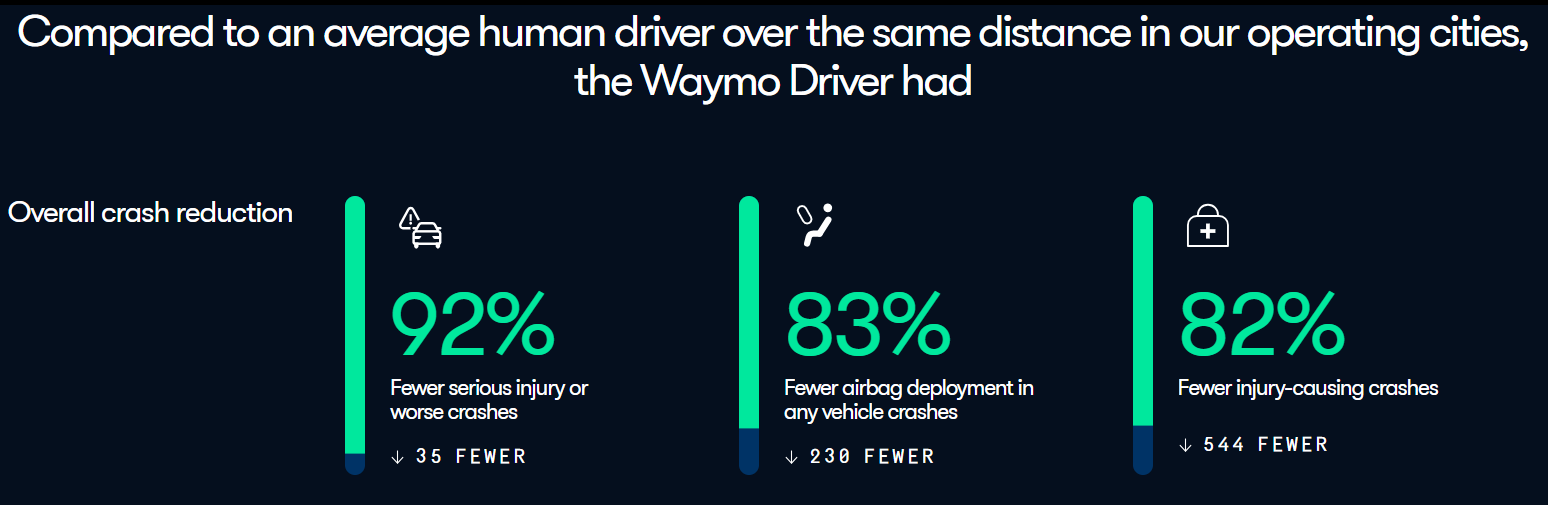
The industry is moving from selling static hardware to delivering vehicles that keep learning, updating, and adjusting over time.
Case Study 3: AI in agriculture
Agriculture uses AI, sensors, and drones to treat fields less like one large plot and more like thousands of small decisions.
Computer vision distinguishes crops from weeds. Predictive models estimate yield and disease risk. Satellite and drone imagery guide variable-rate seeding, fertilizing, and spraying.
A field starts to look different when technology sees it row by row.
One section may need more water. Another may need less fertilizer. Another may show early signs of disease before the farmer can see it from the ground.
That level of detail changes the work.
With AI-driven insights, farmers can make more targeted decisions across their operations and use resources with less guesswork. The following examples show how these tools are producing measurable benefits in modern agriculture:
Efficiency and sustainability
The sustainability payoff is real.
John Deere’s See & Spray technology, built on computer vision, has shown substantial reductions in herbicide use by targeting only the weeds instead of blanketing the whole field.
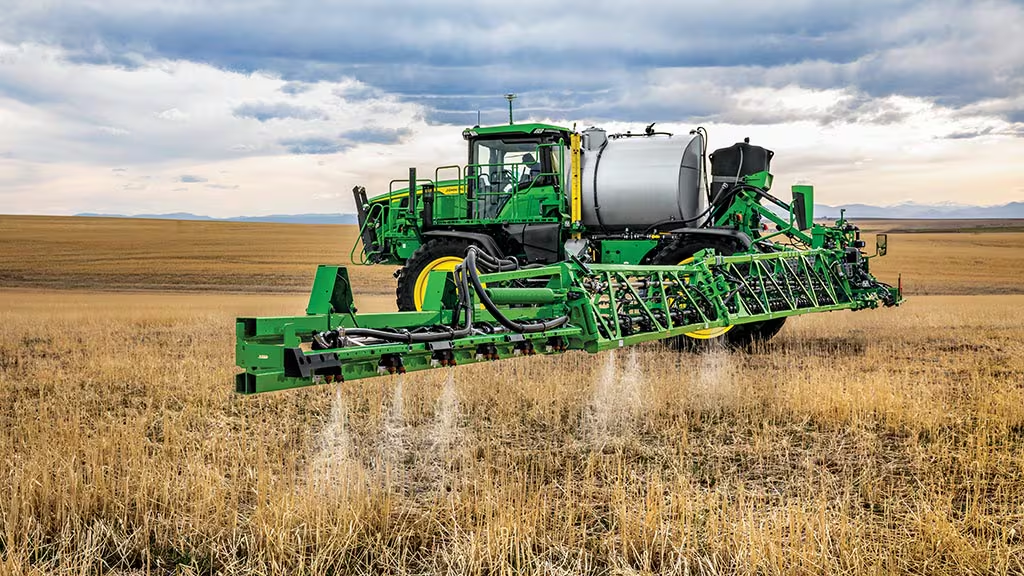
That matters in a very practical way.
Less chemical use can mean lower costs. It can also create fewer environmental impacts. In farming, that matters because each pass across a field uses fuel, time, labor, and resources.
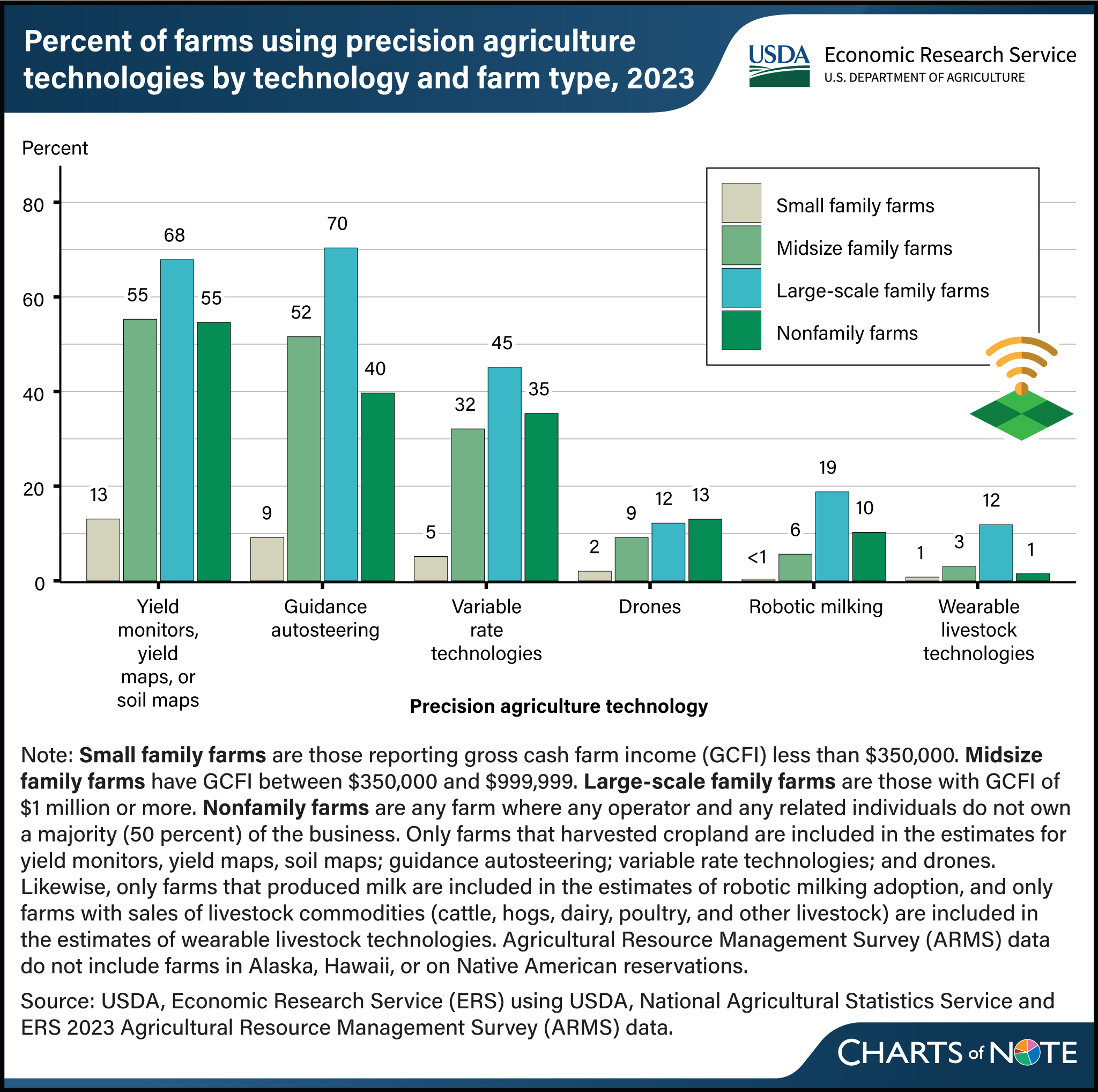
Precision tech like auto-steer and yield monitors is already mainstream on larger U.S. farms.
On large-scale family farms, USDA data shows guidance autosteering is used by 70%, suggesting these tools have moved from niche equipment into everyday operations quite quickly.
The important thing here is that AI does not replace the farmer’s judgment.
It gives the farmer more signals.
That matters because agriculture is full of uncertainty. Weather changes. Input costs move. Disease risk shifts. Labor availability changes. A model cannot remove all of that, but it can help farmers act earlier and waste less.
Real-world example
Smallholders and large operations alike are tapping AI.
In East Africa, the PlantVillage Nuru smartphone app helps farmers identify crop diseases in the field using on-device computer vision and simple photos. It brings expert-level triage to places with few agronomists.
That part matters.
AI is not only useful when a business has a large technical team or an expensive equipment stack. Sometimes, the strongest use case is simple: a phone, a camera, and a model helping someone make a better field decision.
On large row-crop farms, targeted spraying with soil moisture sensors can create double wins: major reductions in herbicide and fuel use while keeping yields more stable overall.
When your margins ride on input costs and unpredictable weather, that is not a small shift.
Case Study 4: AI in finance
Financial institutions are natural homes for AI.
Banks, lenders, payment companies, and insurers already sit on huge streams of structured and unstructured data. Models can analyze transaction graphs to spot abnormal behavior, score credit risk, and flag money laundering patterns.
They can also parse call transcripts to detect customer distress and help compliance teams read mountains of documents.
The reason is simple.
Finance has patterns everywhere. But many of those patterns are hard to see quickly when humans are looking at one transaction, one file, or one alert at a time.
Having worked with a charity built around anonymous giving, Ryan Walton, Program Ambassador at The Anonymous Project, sees how much trust depends on secure systems, smooth digital experiences, and confidence that money reaches the right place.
“AI systems can process transaction patterns at a scale and speed impossible for human analysts,” Walton says. “That matters because financial risk is often hidden in small signals across thousands of payments or transfers. AI can help flag suspicious activity earlier, reduce manual blind spots, and give teams a clearer view of where human review is needed.”
AI helps financial institutions strengthen security, improve decisions, and streamline operations across the business.
These key benefits and real-world applications explain why finance teams are adopting AI at a growing scale:
Benefits to financial institutions
The benefits are easy to understand when you look at the daily problems.
Faster decisions. Fewer false positives. Better customer experiences.
In a joint survey by the Bank of England and the FCA, banks stood out as the strongest users of machine learning, with 18 bank respondents saying they use ML. That shows how far AI has moved into everyday finance work, especially around fraud, risk, and operational decisions.
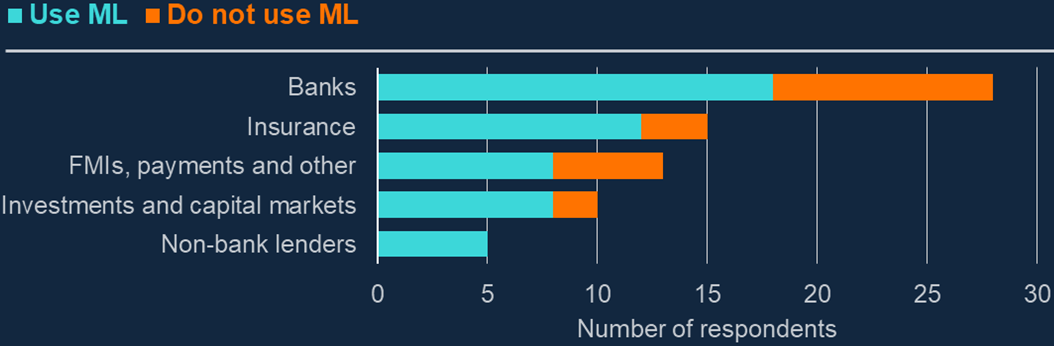
But finance is also where the governance burden becomes very visible.
A bank cannot simply say, “The model said so.” They have to explain decisions, monitor fairness, protect customer data, and satisfy regulatory expectations.
That is especially important as AI chatbots for financial services move into customer support, onboarding, loan assistance, and account servicing. These tools can speed up interactions but still need clear boundaries, escalation paths, and monitoring.
There is a useful lesson here for other teams too.
Financial institutions often treat AI outputs with the same caution a good editor brings to generated copy. The rule is simple: do not submit a text without editing, and do not act on a model output without review when the stakes are high.
In finance, that review might involve compliance teams, analysts, audit trails, and model risk controls.
Case example
American Express has discussed with Nvidia how it uses machine learning to evaluate transactions in milliseconds, combining deep historical patterns with real-time signals to block fraud while approving legitimate purchases.
Behind the scenes, teams pair these models with human analysts and robust monitoring so accuracy does not drift.
The best setups feel invisible to cardholders.
Things just work. Fraud quietly drops. Legitimate purchases go through. Customers do not see the model, but they feel the result.
That is often the highest compliment for AI in finance.
It becomes useful without becoming intrusive.
Case Study 5: AI in education
Schools are shifting from one-size-fits-all toward “meet me where I am.”
Adaptive platforms and AI tutors adjust difficulty as students work, surface targeted hints, and guide them toward mastery instead of simple completion.
What matters is not extra content. It is better-timed support when students need help moving forward during the actual learning process itself.
That distinction matters.
More content can overwhelm a student. Better timing can help them move forward.
Educators are discovering both new opportunities and practical considerations that come with the implementation of AI-powered tools. These are some of the key challenges and outcomes shaping the use of AI in education today:
Challenges in implementation
Schools still face very practical barriers.
Device access. Bandwidth. Training time. Data privacy controls for minors. Teacher confidence. Procurement rules. Parent questions.
The technology may sound advanced, but implementation often comes down to ordinary realities: who has a device, who has time to learn the tool, who reviews the output, and whether the system actually helps teachers instead of creating one more dashboard to manage.
Teachers want tools they can trust and tweak, not black boxes that spit out scores.
District leaders need clear evidence and simple procurement paths. A helpful rule we have seen is to start small, pick one course or grade level, and build feedback loops into every week of rollout.
AI also brings a writing challenge into schools.
Students and teachers are already experimenting with AI for content, from brainstorming to lesson support to draft feedback. That can be useful, but only when the process is clear. Students need to know what is allowed, what must be cited, and how to revise the work so it reflects actual understanding.
In that sense, schools are not just using AI to improve learning outcomes. They are also teaching students how to improve AI-generated content responsibly, which means questioning outputs, checking facts, strengthening weak explanations, and adding their own reasoning before anything is turned in.
Outcomes worth noting
The impact shows up in both achievement and access.
Randomized studies have found that platforms like ASSISTments can improve math outcomes when teachers integrate them into regular practice and feedback cycles.
That last part is important.
The platform alone is not the story. The improvement comes when teachers use the feedback, adjust instruction, and make the tool part of the learning routine.
Outside the classroom, Georgia State University used Pounce, an AI-enhanced text messaging chatbot, to support students through the enrollment process. Students sent 50,362 messages to Pounce, while only 472 had to be routed to counselors, meaning more than 99% were handled by Pounce and Mainstay.
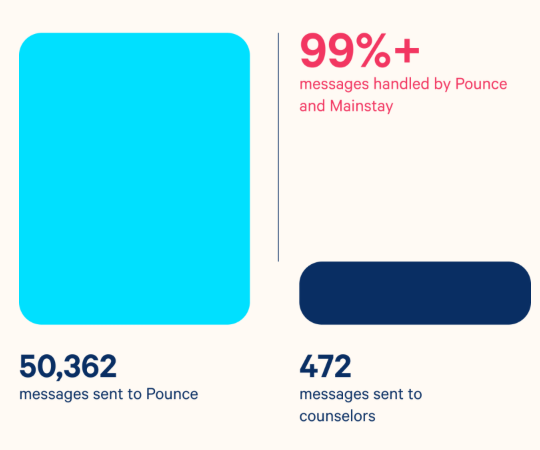
That matters because AI in education is not just about delivering content.
It is also about timing.
A student may not need a full counseling session. They may need one clear answer at the right moment. They may need a reminder, a nudge, or a simple explanation before a small point of confusion turns into a missed enrollment step.
That is where AI can help without pretending to replace the people who matter most.
What comes next
Across healthcare, automotive, agriculture, finance, and education, a pattern stands out.
The most successful AI projects are tightly scoped, deeply embedded in existing workflows, and measured against outcomes people care about: fewer crashes, earlier diagnoses, lower input costs, less fraud, more students succeeding.
They start with data quality and user trust.
They also treat change management as seriously as model accuracy.
That part gets overlooked.
A model can be technically impressive and still fail if people do not understand when to use it, how to question it, or what to do when it produces something uncertain.
The organizations getting value from AI are usually not the ones chasing the broadest use case. They are the ones choosing a real problem, testing carefully, and building around the humans who will use the system every day.
You can expect more “edge AI,” where models run on devices in clinics, cars, fields, and classrooms. Expect copilots for domain experts, not just for coders. And expect more regulation and standards, from medical device approvals to safety cases for autonomy to horizontal laws like the EU AI Act that shape risk management and transparency across sectors.
These case studies point to a few things: pick a real pain point, partner closely with end users, validate in the field, and instrument everything.
The tools are maturing fast.
The hard part, and the opportunity, is weaving them into daily work so the benefits show up where it counts.
If you’re exploring ways to use AI more effectively across your organization, consider using Writecream’s all-in-one AI platform. It can help streamline content creation, improve productivity, and support consistent communication while adapting to your specific goals.
To learn more, sign up today!