Looking for more ways to get a higher return on investment (ROI) from your content?
Then you need to start taking content distribution seriously.
With billions of posts, videos, and articles published every day, the digital ecosystem is saturated. This means even excellent content can get missed without deliberate distribution planning.
But thankfully, you’ve come across this trusted guide. 🤩
Keep reading to learn what content distribution is, how it compares to content repurposing, and why distribution matters more than ever.
Stick around ‘til the end for a super practical content distribution framework you can start using today. 👇
Before diving into strategies and frameworks, let’s first clarify what content distribution actually means.
What is content distribution?
Content distribution means sharing, promoting, and publishing content across various channels.
Channels may include:
- PR Newswire (for press releases)
- Niche communities
- Content syndicates
- Podcast platforms
- Email newsletters
- Social media
- Websites
- Ads
And more.
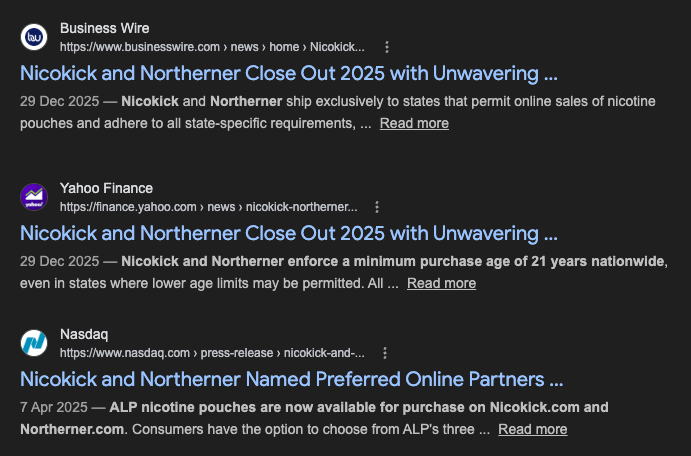
Take a look at Northerner’s distribution approach for its nicotine pouches. See the image below. The team amplified its message through press releases, media syndication, and partnerships. This led to reaching trusted platforms like Business Wire, Yahoo Finance, and Nasdaq. 👇
(Image by uSERP)
Northerner’s Distributed Content
The lesson is clear: even niche industries win by treating distribution as a growth lever, not an afterthought, extending content reach far beyond owned channels.
What’s the difference between content repurposing and content distribution?
Content repurposing means adapting a single piece of content into new formats to suit different platforms and audiences. For example, you might turn long-form blog posts into video scripts and social clips.
Content distribution means sharing content (or its repurposed versions) across multiple channels to maximize reach.
In other words, content repurposing turns one asset into many. Content distribution pushes that content out across multiple channels. The two work hand-in-hand.
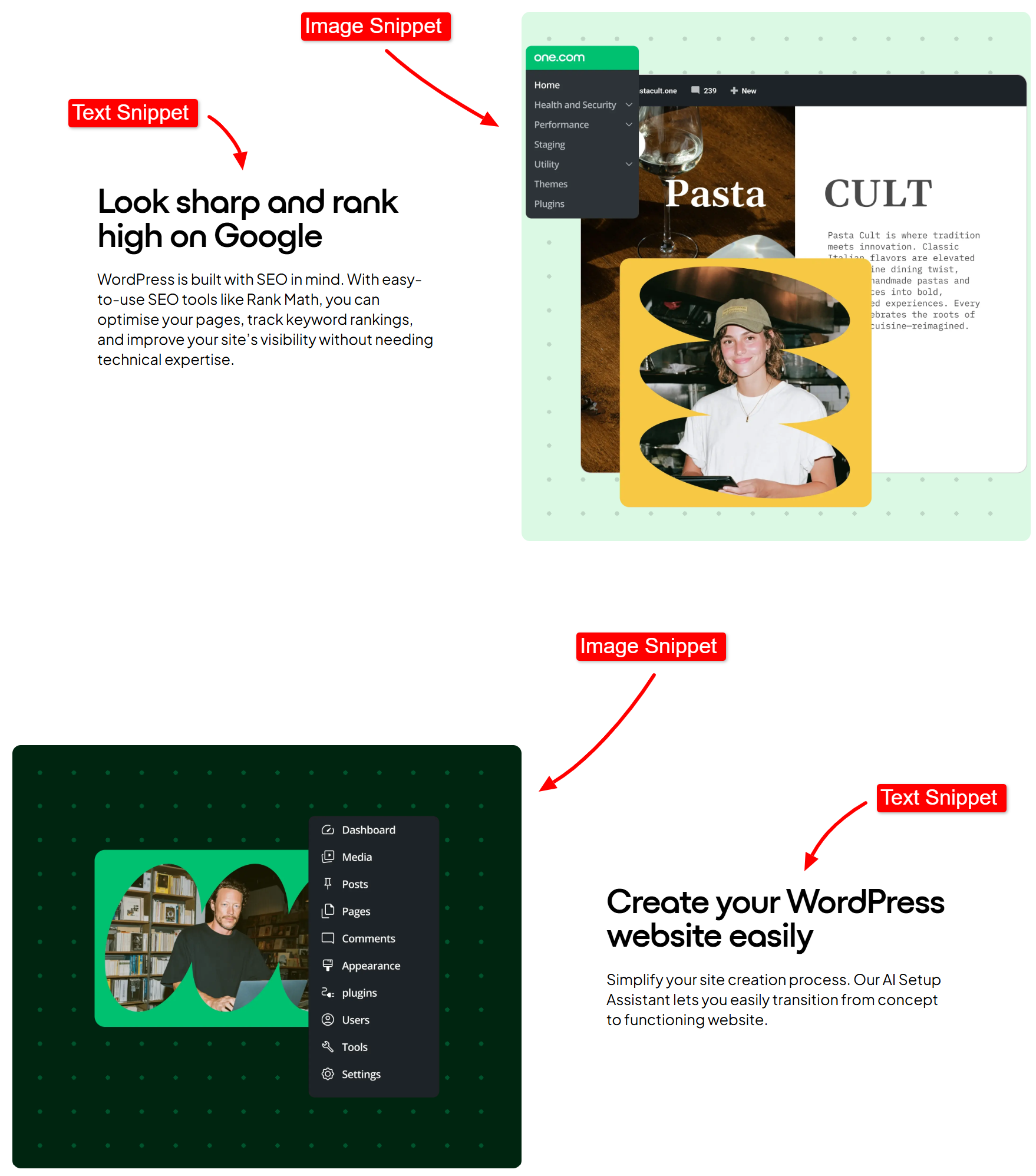
Take a look at this pillar page on managed WordPress hosting. 👇
Pillar Page
If you scroll through it, you’ll notice it has eight image snippets, 20+ text snippets, a case study video, and an FAQ section. These are prime content distribution materials. All you need to do is extract them, slightly repurpose them so they feel native to each channel you’ll be promoting on, and then distribute them!
If you need help with content repurposing, check out Writecream’s generous list of free tools.
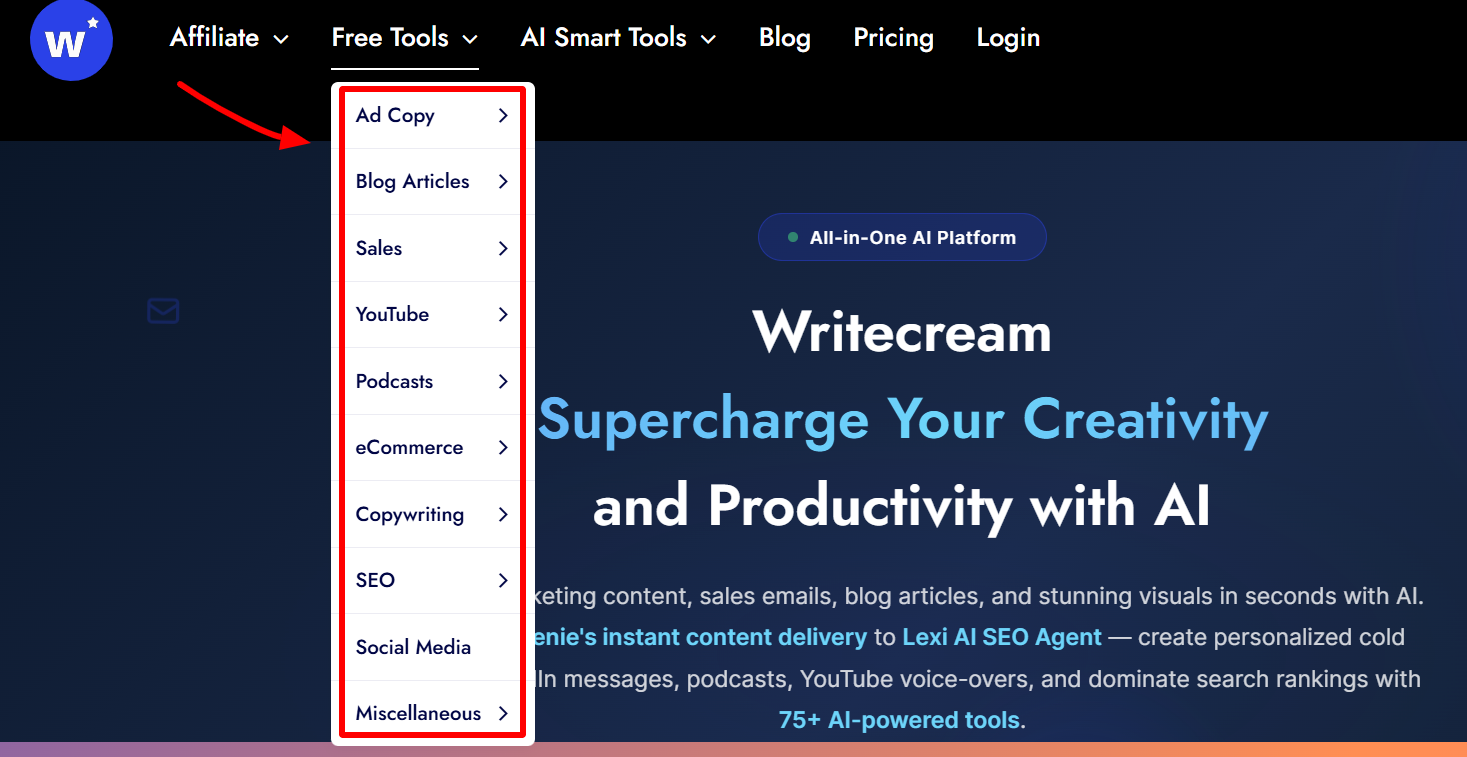
Free AI Tools
Why content distribution matters more than ever
Distribution maximizes content ROI by driving traffic and increasing brand visibility.
Let’s take a closer look at why content distribution is so important in 2026. 👇
1. Algorithms prioritize signals
Platforms like Google, LinkedIn, TikTok, and others use engagement signals (e.g., early traction, relevance, interactions) to decide what gets shown to more people. When you consistently publish content across channels and audiences engage, it triggers algorithms to boost your visibility.
2. Distribution helps you hit your KPIs
The more places you distribute your content, the more chances you have to drive traffic, leads, and conversions.
3. Multi-channel marketing requires intentional reach
Audiences are fragmented across platforms, formats, and contexts. A single-channel strategy (e.g., just blogging or just social) severely limits your reach.
A modern distribution strategy actively shares content across multiple touchpoints to promote comprehensive exposure.
4. Distribution extends content lifespan and ROI
Distribution increases your content’s shelf life. You can repurpose a single piece of content into 20 different optimized assets and then share them across your channels. This helps compound its impact over time and reduces the effective cost per engagement.
5. Distribution supports your SEO strategy
Search visibility is influenced by broader distribution signals like backlinks, mentions, citations, and cross-platform references.
This makes distribution a core part of search visibility.
Now that we’re clear on the why, let’s look at how to distribute your content.
Get ready to take notes! 📋
A practical content distribution framework
Follow this three-step content distribution framework to get more eyes on your content in 2026.
(If you already have high-performing content on your website that needs to be distributed, you can skip steps one and two for now and go straight to step three. Circle back to steps one and two when you’re ready to create fresh content.)
Step 1: Start with a strategy
Ask: What are we trying to achieve?
Without a clear answer to this, even well-distributed content can fail to produce meaningful results.
Your content marketing strategy and content distribution strategy should work together here. One defines what you create and why. The other defines how it gets seen.
Get clear on your audience segments and where they sit in the content lifecycle. (Someone discovering your brand for the first time needs a very different experience than someone ready to buy.)
Then define your content KPIs. Are you aiming to increase website traffic? Drive lead generation? Improve conversions?
Here’s an example:
- Customer segment: Retail founders in the middle of the funnel, struggling with foot traffic
- Goal: Lead generation
- KPI: Email signups
Do this for every segment you’re targeting.
Now your distribution has direction. ☑️
Step 2: Create original content
Build intentional content assets that can be reused across multiple content formats. Long-form content assets (like blog posts, pillar pages, and videos) are fantastic for SEO and provide plenty of material to repurpose and distribute.
Here’s a structure you can follow for long-form content creation:
➜ Create one pillar page that helps support your audience segment, goal, and KPI from step one. Publish this as a “parent page” on your website. (Do this for each customer segment.)
➜ Around that, create supporting blog posts that target specific problems and questions. (Based on your target keywords.) Publish these as “child pages” and interlink them strategically. Make sure to link back to your parent page, too. Your parent page should also link out to your child pages.
Important: Add internal links where they make sense. Use anchor text that clearly reflects the linked page’s topic.
➜ Then create supportive visual content like videos, image snippets, and infographics. Again, weave these in where they make sense. Aim for one image for every 350 words of text per page. You should have relevant, helpful visuals on your parent pages and child pages.
Note that visuals are especially important if you sell products.
For example, take a look at ScentSplit’s blog post on autumn perfumes. 👇
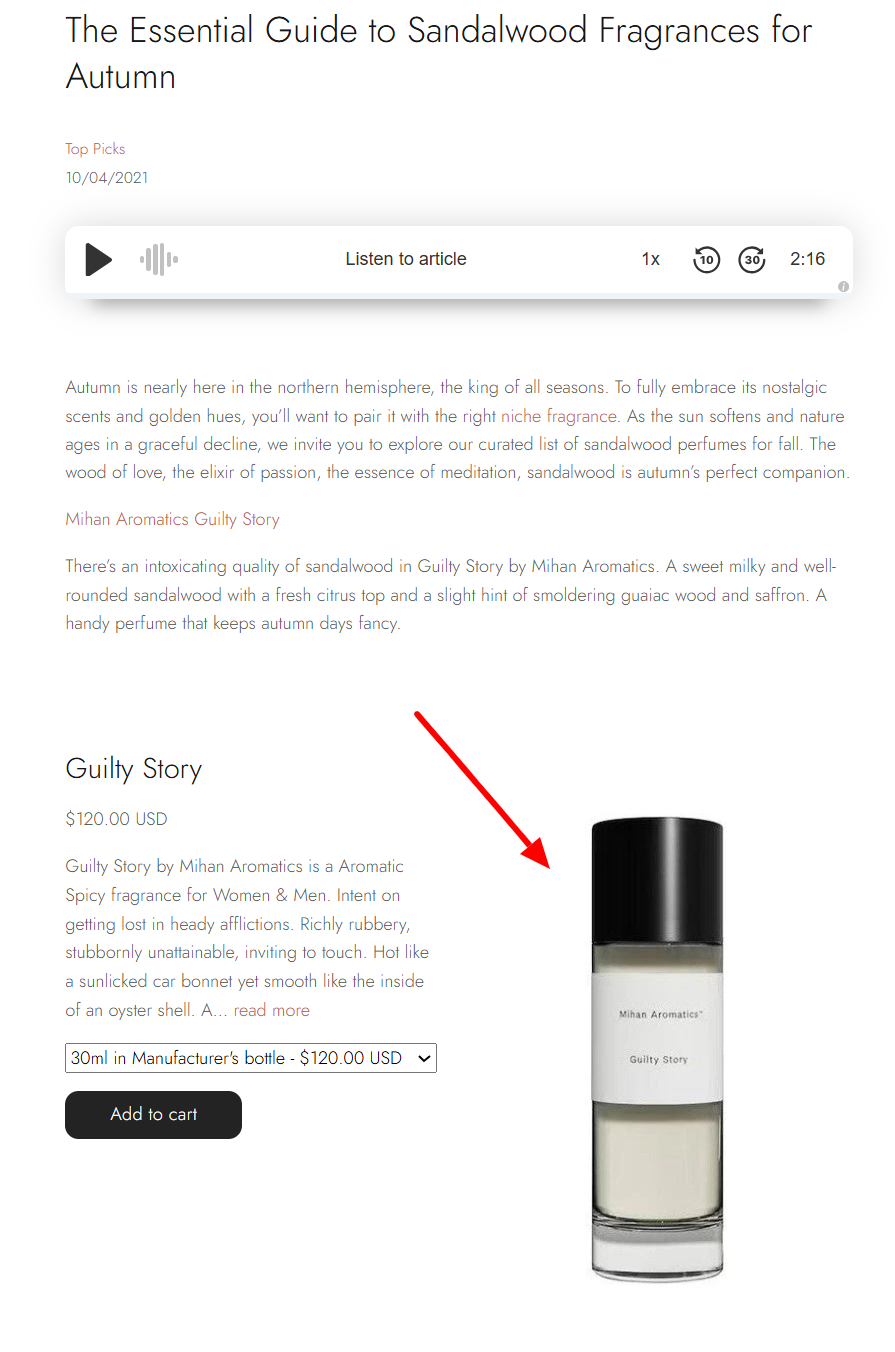
Autumn Perfumes
Every perfume listed includes a detailed description and a beautiful product image, so perfumery lovers can visualize the scent, compare options, and feel confident choosing their next fragrance.
Again, these are prime repurposing assets. You could pin them on perfume Pinterest boards, create a product carousel on Instagram, and share them in lookbooks for email subscribers. You could also use them to create shoppable videos.
Now that your assets are ready, the next step is to put them in front of the right audience.
Step 3: Distribute your content
At this point, you should have several pillar pages, blog posts, and visuals you can repurpose and distribute.
Take a close look at each asset and decide how you’ll repurpose it. (Note: You can share links to the original asset, and then share repurposed snippets after.) For example, you can turn a single blog post into five LinkedIn posts, five posts on X, a newsletter feature, and a talking point for a podcast.
Writecream is super helpful for this.
You can use:
- The social media captions tool for Instagram and Facebook
- The paragraph generator for text snippets
- The Facebook ad copy tool for Meta ads
- The social media posts tool for LinkedIn
And those are just a few of Writecream’s many, many choices for content creators.
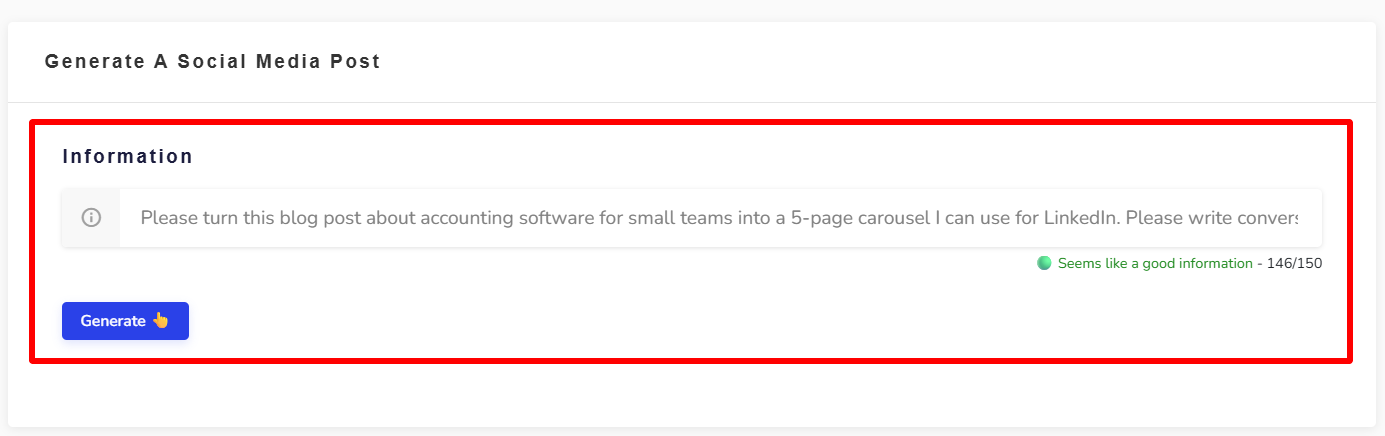
(Image by Ioana)
Writecream AI Writing Tool
Consider each channel you’ll be using before repurposing your assets so they look and feel native to each platform. (E.g., repurpose content as short videos for TikTok and Instagram, mid-sized videos for YouTube, carousels for LinkedIn, press releases for PR channels, etc.)
Canva also has a Magic Resize tool you can experiment with to ensure your posts have the correct aspect ratios.
After your assets are ready, distribute them.
Spread them across these three areas: Owned media, earned media, and paid media.
➜ Your owned media is your foundation. This includes your website, email newsletters, email lists, and social media profiles. It’s where your owned content lives and where you control the experience. By utilizing a flexible website builder, you can easily customize this environment to align perfectly with your brand identity and user experience goals without relying on third-party algorithms.
➜ Then expand into earned media. This is where distribution starts compounding. Think guest blogging, influencer collaborations, and organic social media engagement that gets your content in front of new audiences.
➜ Then, use paid media to scale what’s already working. Paid distribution channels like sponsored content, native advertising platforms, and paid promotions can help you push high-performing content further.
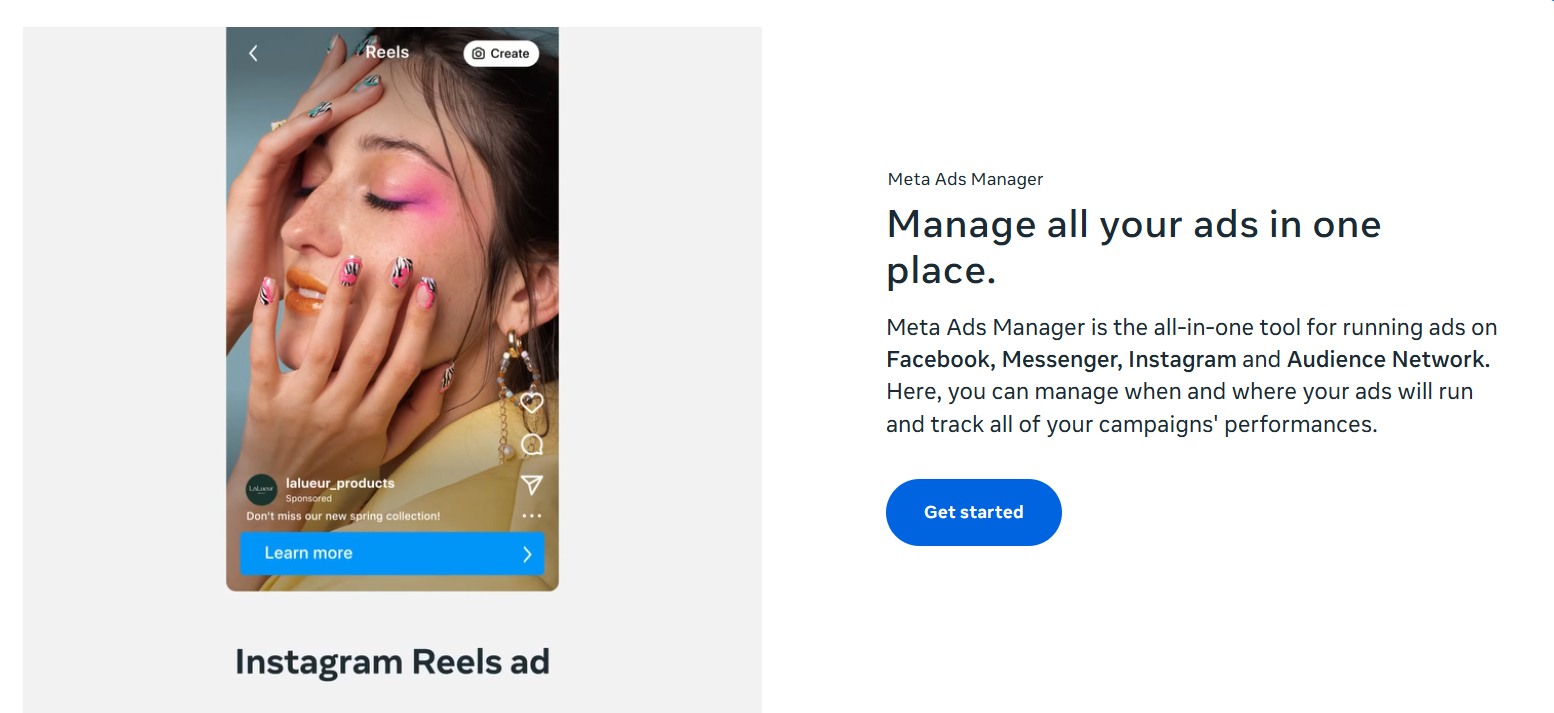
Meta Ads
You can also share your content across content distribution platforms, podcast platforms, PR sites, and content syndicates when it makes sense.
Employees can also play a meaningful role in amplifying content if they feel connected to it. Incorporating simple employee engagement ideas, like sharing helpful prompts for LinkedIn or X posts, can help increase visibility without additional spend. And a double bonus: It does wonders for your employer brand!
For distribution across social media, you may need to invest more in paid ads upfront if your organic presence isn’t strong yet.
If you’re on a limited budget, start with social media ads that target platforms your audience uses most. For example, if you target Gen Z makeup enthusiasts, TikTok ads may be the best place to start.
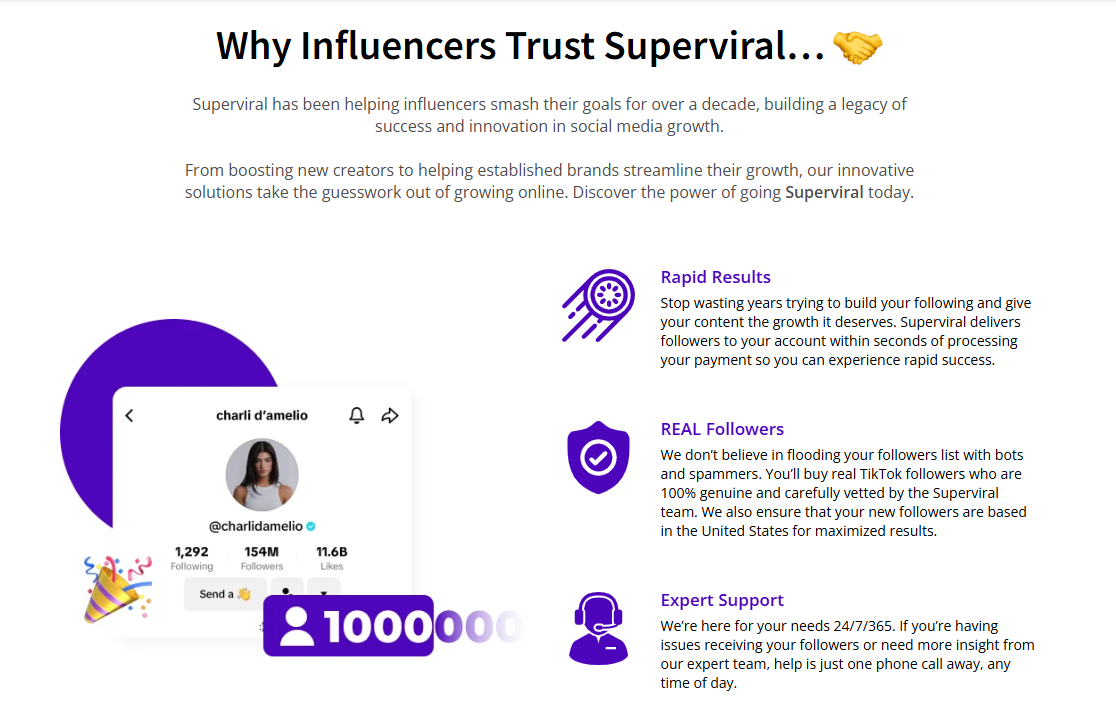
You might also think about purchasing followers on TikTok to help boost your profile.
Superviral Screenshot
This can help you gain the early engagement needed to trigger broader organic reach — as long as you still post high-value content consistently.
(Many established brands and content creators do this, btw. It’s completely safe if you choose a trusted provider.)
Wrap up
Content doesn’t fail because it’s bad. It fails because no one sees it.
Keep your distribution plan simple:
- Start with a clear strategy.
- Create strong, reusable assets.
- Keep the momentum going with smart repurposing. Then distribute across owned, earned, and paid channels.
From there, audit what’s working. Double down on the content driving results. Cut or improve what’s not.
The brands that win today aren’t just creating better content—they’re distributing it more intentionally and consistently.
And if you want to move faster, use Writecream to repurpose your content without starting from scratch every time.