


Good AI use rarely looks like pressing a button and walking away.
It looks more like a handoff that keeps looping back to people. AI can process information, summarize long inputs, predict likely outcomes, and handle repetitive work faster than a team could manage manually. Still, speed is not the same as judgment. People are the ones who understand trade-offs, relationships, fairness, risk, and the moments when something sounds right but is not.
That is the important distinction.
Even when automation does much of the processing, humans still frame the task, question the result, correct errors, and own the final decision.
Most jobs now have at least 1 or 2 areas where AI can help. Drafting reports. Sorting customer tickets. Flagging unusual data. Rewriting product descriptions. Supporting email marketing campaigns. Even helping teams use AI for content without letting the work sound flat or careless.
AI’s usefulness is not really the issue anymore.
The bigger issue is whether people know how to guide it without overtrusting it.
This article explains how human-AI collaboration works inside teams, where it supports better work, what slows it down, and which habits make progress easier.
The Current Landscape of Human-AI Collaboration
AI has moved into ordinary business work.
Marketing teams draft briefs, tag content, and test campaign angles. Sales teams use it for lead scoring. Developers get code suggestions in real time. Operations managers forecast demand. Support agents review AI-written answers before customers see them during busy periods.
Some teams use it heavily.
Others are still watching from the side.
Adoption rates are climbing, but not evenly. IBM’s Global AI Adoption Index reported that 35% of companies used AI, with another 42% exploring it.
Stanford’s latest AI Index reports that U.S. private AI investment reached $285.9 billion in 2025, alongside 1,953 newly funded AI companies.
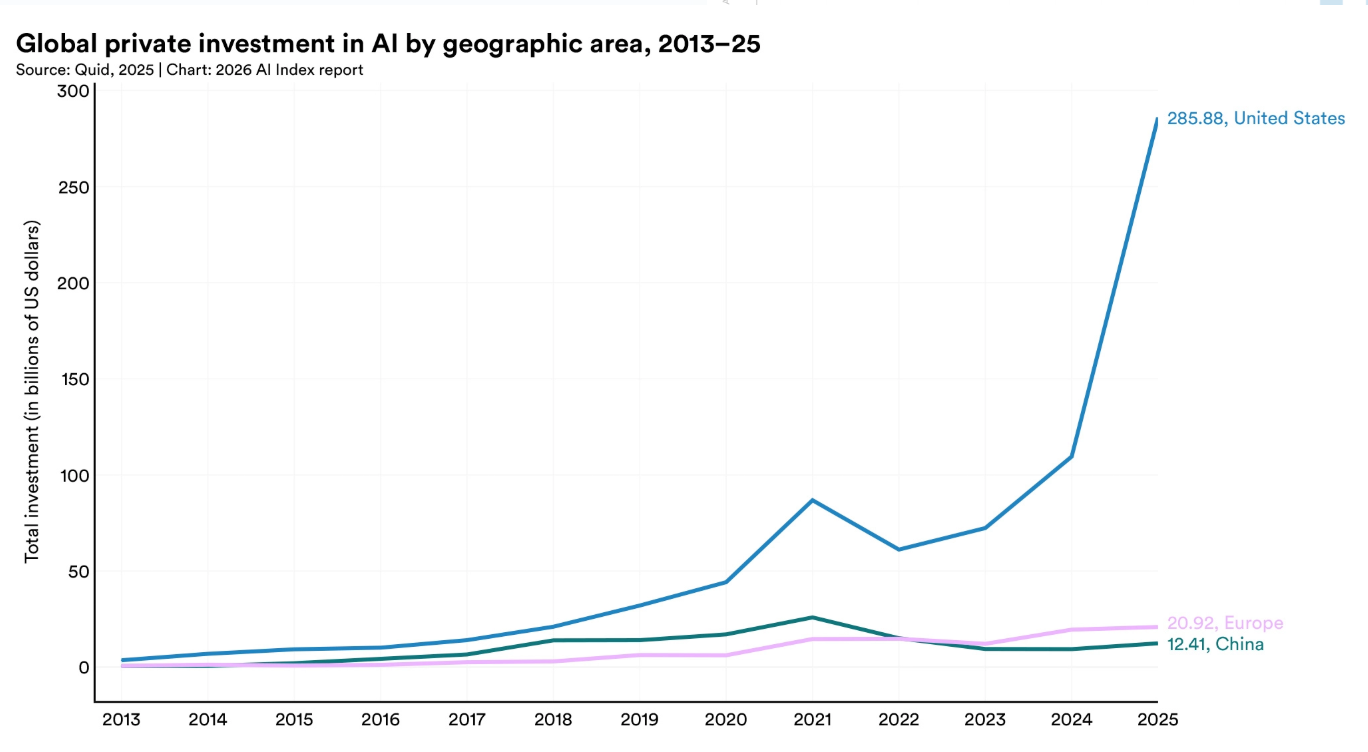
That level of funding says something practical. Investors are still backing AI, even while other parts of the venture market have become more selective.
It also shows that AI is not only moving inside large companies. It is still creating new companies, new tools, and new categories of work.
But funding alone does not create good collaboration.
People do.
Benefits of Human-AI Collaboration
Used well, AI can extend a team’s reach.
It drafts, summarizes, sorts, ranks, and checks faster than people can. That frees time for work requiring judgment: strategy, relationships, creative problem-solving, and careful review.
Across large datasets, AI can scan millions of rows in a way no person could manage in one day. But a person still has to ask, “Does this pattern actually matter?” Is the recommendation fair? Would this decision make sense to the customer, employee, patient, or user affected by it?
That is where collaboration becomes useful.
As founder of Land Portal, a platform that leverages state-of-the-art AI to turn unreliable or outdated property data into clearer real estate insights, Daniel Apke sees how useful AI becomes when it helps people make sense of scattered information.
“AI is strongest when it gives people a clearer starting point. It can organize data, flag patterns, and point to possible opportunities, but people still need to decide what those signals mean in the real world. That judgment is what turns information into a useful decision,” Apke notes.
AI can also help teams apply standards more consistently. This matters in support, compliance, quality control, finance, and operations. It can reduce the random differences that happen when tired people are rushing through repetitive work.
For example:
The gains are not limited to large technical teams.
A small marketing team might use AI to compare campaign performance. A retailer might use it to improve product tagging of custom hoodies before they reach customers. A content team might use review prompts to improve AI-generated content before an editor shapes the final version.
The pattern is usually the same.
AI handles the routine or data-heavy work. People use the extra time to make better decisions.
Challenges in Human-AI Collaboration
Collaboration is not automatic.
Real obstacles get in the way.
New tools require new habits. People need time to experiment, fail safely, and understand what a system is good at. They also need to know what it is bad at.
That is where many rollouts go wrong.
A tool appears. A short training session happens. Then employees are expected to change the way they work overnight.
That rarely works.
Concerns about job displacement create resistance too. Pew Research analysis found that 52% of employed adults are worried about how AI may be used in the workplace in the future.
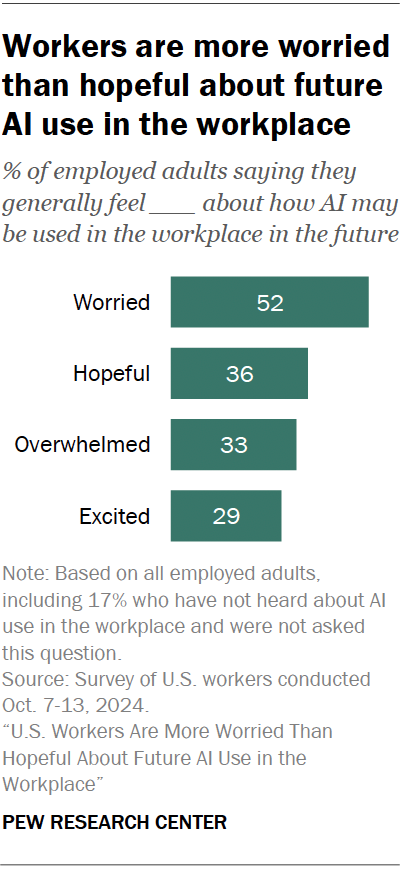
That number helps explain why some teams move slowly. If people think AI is being introduced to replace them, they will not approach it with curiosity. They will protect themselves.
And honestly, that reaction makes sense.
Clear guidance helps. Practical training helps. So does honesty about what the company will and will not automate.
Data privacy and security also need serious attention. Data handling cannot be an afterthought with AI. Teams need privacy controls, restricted access, and retention policies, (often enforced through cloud archiving solutions) especially in healthcare, legal work, HR, and finance, where AI chatbots for financial services may process regulated or personal information.
Bias creates another risk.
Models can reflect and amplify patterns from their training data. If nobody checks the output, the system may make old problems faster instead of making work better.
Winning Strategies for Effective Collaboration
Strong AI adoption starts with the work itself, not the tool. Teams need to decide where the machine should support the process and where human judgment cannot be removed.“The most effective AI implementations are not defined by automation levels, but by how precisely organizations separate pattern recognition from human judgment. When that boundary is clear, AI increases speed without eroding accountability.”, says Eric Yohay, CEO & Founder of Outbound Consulting.
The 4 strategies below help make collaboration more practical, controlled, and sustainable:
Education and training programs
Confidence comes from practice.
Not from one webinar.
Continuous, practical training beats one-time workshops because people learn AI by using it on real tasks. Hands-on labs, office hours, and short challenges tied to daily work usually do more than long lectures.
A beginner might need help with a simple prompt. An experienced user may want guidance on fine-tuning outputs, building reusable workflows, or deciding when to train AI around approved examples and internal standards.
Keep the support close to the work.
Short videos get used more than long manuals. Playbooks help when they answer real questions. What should I put into the tool? What should I avoid? When should I ask a person to review this?
Teams should also repeat a simple rule: do not submit a text without editing. That rule applies to customer emails, reports, product copy, and internal summaries. AI can create a first draft. It should not be treated as the final voice of the company.
AT&T’s multiyear reskilling initiative demonstrates how sustained investment helps a workforce adapt to new technologies. By combining online courses, university partnerships, and a career center that maps employees to future roles, the program treated reskilling as a long-term workforce strategy rather than a one-time training push.
IBM’s SkillsBuild program helps people develop skills for AI-enabled roles. Its learning paths, free courses, and digital credentials make skill-building more accessible for people preparing for work shaped by AI, data, cybersecurity, and other technical fields.
Creating a culture of open communication
People need room to ask honest questions.
Is this output any good?
What should we never automate?
Who is accountable if the system gets something wrong?
Leadership sets the tone here. Clear answers work better than hype. It helps to define where AI fits, where it does not fit, and why that boundary exists.
Make feedback normal.
Hold recurring Q&As about AI use cases, limitations, and safeguards. Invite frontline employees to test tools before full rollout. Let them point out the awkward moments, not just the success stories.
Document what matters:
Open discussion about both risks and benefits tends to reduce resistance. It also surfaces better ideas.
The person closest to the work often sees the best use case first.
AI as an augment, not a replacement
AI should behave like a capable assistant.
Not an invisible boss.
Design workflows where people remain in control, especially when decisions affect money, safety, health, legal rights, hiring, or customer trust.
Use AI to draft, rank, summarize, or recommend. Then have people review, adjust, and finalize. That gap between suggestion and decision is important.
Keep it visible.
Tanyaporn Trirotanan, Vice President of Veerasak Gems, works in an industry where trust, detail, and careful human judgment shape every customer decision.
She says, “AI can help teams move faster, but it should not make the final decision for them. In a business built on trust and precision, the strongest systems are the ones that prepare information clearly so people can review it, question it, and decide with confidence.”
A practical workflow might look like this:
- AI drafts or analyzes the first version.
- A person reviews for accuracy, tone, and context.
- The team checks anything that could create risk.
- The final version is approved by a human.
- Good and bad examples are fed back into prompts, documentation, and training.
This keeps learning inside the system and inside the team.
A simple guideline still holds: if an error would cause harm, humans must stay in control. That is why most AI workforce transformation initiatives start by sorting out which decisions can be undone and which ones need a person to make the final call, instead of changing every process at once.
Cross-functional teams and flexibility
The best results usually come when technical people and domain experts work together.
A claims specialist and a data scientist.
A merchandiser with a machine learning engineer.
A creative lead with someone who understands prompt design.
That mix matters because AI projects fail when they are built too far away from the actual work. A model might look accurate in testing but feel clumsy in a real support queue. A dashboard might show the right numbers but miss the decision people need to make at 4 p.m. on a Friday.
Start smaller.
Form small, cross-functional groups to tackle 1 problem at a time. Give each group a clear workflow, a clear success measure, and permission to adjust the process as they learn.
Designate AI champions in each department. Not as gatekeepers. As practical helpers.
Create approved sets of tools, prompts, templates, and review patterns so teams can move faster without making up rules every time.
The goal is not to bolt AI onto work after the fact.
The goal is to weave it into the places where people already need support.
Case Studies: Successful Human-AI Collaborations
The strongest examples of human-AI collaboration are not about removing people from the process. They show what happens when AI narrows the work and people apply judgment before anything important is finalized.
Here are 3 real-world examples that show the pattern in software, retail, and logistics:
Software development and code assistants
GitHub’s study found that developers using GitHub Copilot completed the task in an average of 1 hour and 11 minutes, compared with 2 hours and 41 minutes for those who did not use it.
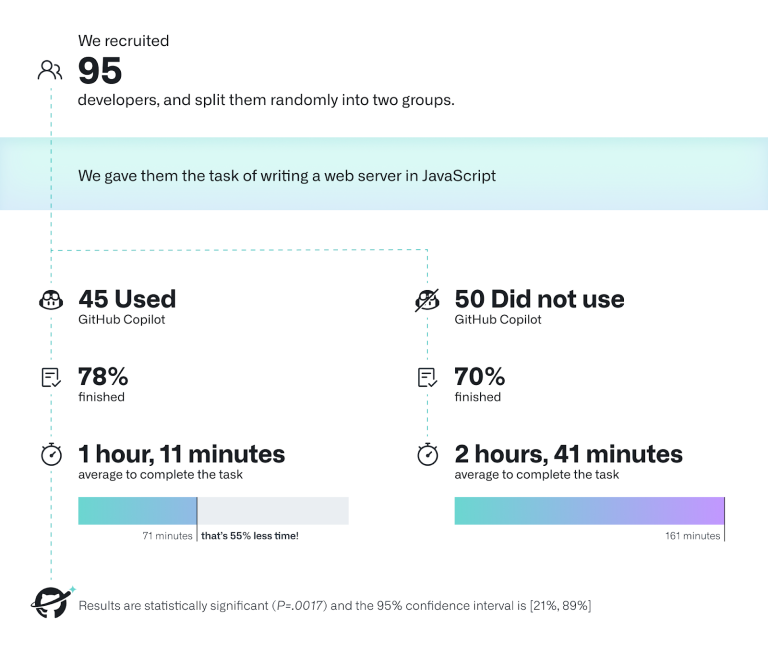
That gap is easy to notice.
But speed is only part of the story.
Code assistants work best when teams pair faster drafting with clear review habits. Developers still need to inspect logic, check security, test the code, and understand what the suggestion is doing.
The tool can reduce blank-page time.
It cannot replace engineering judgment.
Retail styling with humans in the loop
Stitch Fix combines algorithms with professional stylists to personalize clothing recommendations. Their approach shows how data science can narrow options while humans apply taste, nuance, and customer understanding.
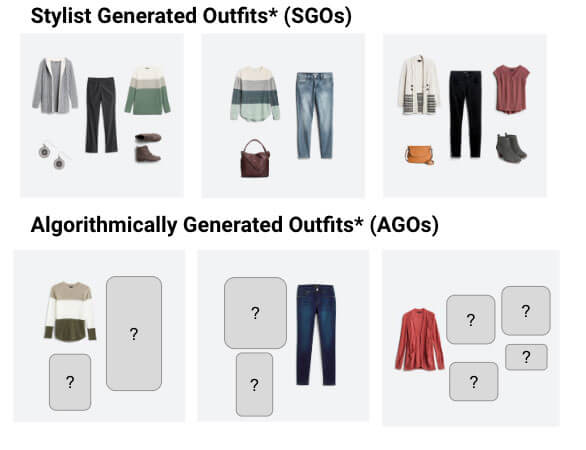
That human layer matters because preference is not only a data problem.
A customer may say they want something bold but still avoid certain colors. They may be shopping for a new job, a trip, a body change, or a version of themselves they are still trying to define. Data can find patterns, but stylists can read between the lines.
Together, the system becomes more useful.
The algorithm reduces the search space. The human makes the choice feel personal.
AI is also helping fashion e-commerce shoppers make more informed decisions before purchasing. For example, an AI size recommendation tool can combine shopper inputs with product-specific sizing data to provide personalized size guidance directly on the product page, helping customers choose between available sizes with greater confidence.
Logistics and route optimization
UPS’s ORION system uses advanced analytics to optimize driver routes. The system pairs algorithms with driver expertise to reduce miles, save fuel, and improve delivery times.
Drivers still validate and adjust plans on the ground. They know the road conditions, customer realities, and small local details that do not always appear cleanly in a routing system. The system then learns from those real-world adaptations.
That is the collaboration.
AI narrows the possibilities. People apply judgment, context, and experience before the final call is made.
Future Outlook: Evolving Human-AI Collaboration
The next wave of AI will likely feel less like standalone tools and more like networks of software agents.
These agents may plan steps, use other tools, gather information, and hand off work when a path becomes unclear. That could change how teams handle research, reporting, design, support, operations, and internal admin.
Multimodal AI will also matter more. Systems that process text, images, audio, and video together can open up new uses in training, design, customer support, and documentation.
More on-device and edge AI could improve privacy and speed. Better monitoring tools will help teams watch model performance the same way they watch other production systems.
But the bigger shift may be accountability.
Dr. Theerapong Poonyakariyagorn, founder of Interplast Clinic, works in a clinical setting where technology can support better decisions, but patient trust still depends on human responsibility.
Dr. Poonyakariyagorn puts it simply: “AI may become more useful in planning, documentation, and decision support, but it should not remove the human judgment behind patient care. In medicine, people want to know that someone experienced is still reviewing the details, weighing the risks, and taking responsibility for the final decision.”
NIST’s AI Risk Management Framework gives organizations practical approaches for handling risk, transparency, and governance from the start. As regulations mature, industry-specific expectations will become clearer.
New roles will keep appearing too.
AI product managers. Prompt engineers. Data stewards. Workflow designers. Review specialists.
Some job titles will sound new. The underlying need is familiar: people who can explain insights clearly, spot edge cases, and design systems around human needs.
Those skills will matter.
A lot.
Where To Start
Human-AI collaboration works when AI feels like a capable colleague that never gets tired of tedious work, not a mysterious system making decisions in the background.
People need training. They need room to experiment. Conversations need to stay honest. AI should augment human work, not replace it. Mixed teams working on focused problems often deliver value faster than big, abstract transformation plans.
Start with 1 workflow.
Choose something repetitive, measurable, and low enough risk to learn from. Then ask practical questions. What should AI handle? What should a person review? What happens if the output is wrong? How will the team know whether the process actually improved?
Start small. Measure what matters. Share what works.
If you want teams to spend less time wrestling with scattered AI workflows and more time doing sharper work, WriteCream is a practical place to start. It helps creators and businesses use better tools, stronger workflows, and useful resources that turn AI-supported work into something people can actually review, publish, and improve.
Join Writecream for FREE!
In just a few clicks and under 30 seconds, generate cold emails, blog articles, LinkedIn messages, YouTube videos, and more.
It's free, forever!
Leave A Comment
Join Writecream for FREE!
In a few clicks and under 30 seconds, generate cold emails, blog articles, LinkedIn messages, YouTube videos, and more — no credit card required.
Start for FREE