AI now sits at the center of how modern content is created. It outlines, drafts, fixes grammar, and provides SEO cues. Helpful? Absolutely.
But in the rush to keep up with demand, it’s easy to overlook something that matters more than volume: the voice your readers trust.
Repeated use of AI for content without proper oversight results in a catalog of monotonous pieces that deviate from how your audience used to perceive you. Your content voice is starting to feel flat and like every other brand overusing AI.
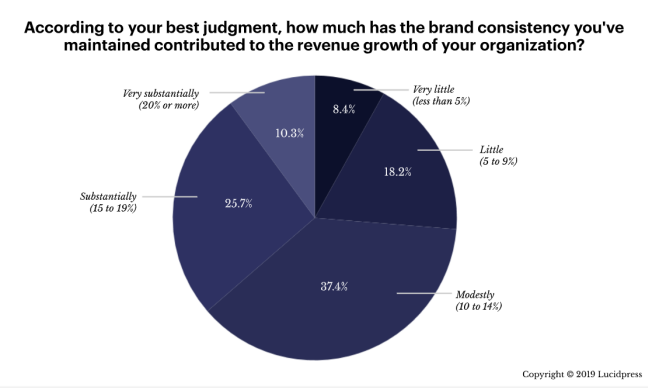
This disconnect has real consequences. Research from Lucidpress shows that brands with consistent messaging substantially grew revenue by 25.7%. Those battling with messaging inconsistencies risk losing growth opportunities.
In this piece, we’ll explain the hidden cost of AI and share practical ways you or your editors can protect what makes your brand sound like itself.
What is the role of AI in content creation?
According to SurveyMonkey, 90% of content marketers used AI to support their content efforts in 2025, 88% use it daily, and 93% report it helps them create content faster.
But how exactly?
- Most teams use AI tools to generate first drafts, repurpose content for different channels, edit for clarity, or suggest keywords and titles that might perform well in search
- Some help structure briefs. Others analyze SERPs and predict intent so you can match what readers are actually looking for
The benefits? Speed, lower per-piece costs, and scalability. AI can turn a messy brainstorm into a usable outline in minutes and crank out on-brand variations faster than any human team.
Popular tools include Writecream, Jasper, Writer, Notion AI, GPT models, and Grammarly.

Beyond written blog content, many teams now use AI to repurpose long-form assets into different short, reusable formats. For instance, AI clips help turn podcasts, webinars, or video interviews into shorter snippets for distribution across channels. Some use AI to create and optimize resumes. That kind of automation improves reach and efficiency, provided there’s an effective editorial review process in place.
AI makes content faster and cheaper. That explains why adoption feels like an obvious win. But if you lean too heavily on automation without strong editorial control, the real costs show up quietly over time.
1. Content library sounds monotonous
When every brand uses similar models with similar prompts, content starts to blur. You know that feeling when you read something that sounds friendly and competent but could have been published by anyone?
This sameness weakens brand signals over time. Readers stop recognizing a distinct voice, and once that familiarity fades, differentiation goes with it.
Content monotony is most prevalent in technical fields. Bates Electric, a residential and commercial electrical services provider in St Louis, Missouri, avoids this by maintaining human oversight at the highest level when using AI to support educational content.
2. Accuracy gradually slips
Accuracy is another concern, especially when you submit AI-generated content without editing. Even state-of-the-art models still hallucinate or misstate details, which the GPT-4 team acknowledges in its own technical report.
This risk becomes more serious in regulated fields. For example, generating AI content for personal injury topics requires legal awareness, jurisdictional context, and careful wording. AI can help draft explanations, but without human oversight, minor inaccuracies can quickly turn into credibility or compliance issues.
3. The ethical and economic angles matter too
Roles won’t vanish overnight, but they will shift. The World Economic Forum estimates that 44% of workers’ skills will be disrupted by 2027, with AI driving both job creation and displacement.
McKinsey suggests that generative AI could automate activities across most occupations and add trillions in economic value, especially in knowledge work, where editing, summarizing, and drafting are core tasks. That’s exciting, but it means we need to invest in new skills like editorial judgment, prompt design, and governance, not just pump out more content.
4. Don’t forget the practical costs
At scale, AI is not free or simple. API usage fees rise quickly with volume. Models change behavior after updates, forcing prompt rewrites and revalidation. Editorial teams spend time reviewing for legal, brand, and factual risk. Guardrails, approval workflows, and compliance reviews introduce operational overhead.
Practical costs rise fastest in sensitive categories like finance. For instance, if you publish educational content on repayment options, debt relief programs, financial hardship, or credit impact, precision and empathy are required to avoid misleading your audience and leading them to make inaccurate financial decisions.
As such, you need to stack editorial and compliance reviews to address tone and factual gaps. These review layers add cost, but skipping them is what turns small mistakes into trust-breaking ones.
The importance of maintaining a consistent brand voice
Brand voice is how your company sounds everywhere it speaks. Confident or casual, technical or conversational, playful or no-nonsense. It ties together your how-to guides, social posts, onboarding emails, and product pages.
Cris McKee, Founder at Getworksheets, works with creators and educators who rely on AI to scale content without losing clarity or identity. His perspective aligns with the idea that brand voice functions as recognition, not just style.
“AI can help you produce more, but it cannot carry your personality for you. If AI overuse levels out your tone, you lose that instant recognition. The content may still be technically correct, but it starts to feel emotionally off, like hearing your best friend speak in a default GPS voice,” Cris says.
Recognition is crucial because it builds trust over time. The more people trust your brand, the more likely they are to use your services. So, maintaining a consistent brand voice is not optional. And that means you need to introduce human review into your content workflow.
By the way, tools like Writecream help reduce that drift by working from your existing voice guidelines rather than overriding them.

4 steps to preserve brand voice consistency as an editor
Editors are the linchpin. AI can get you 60–80% of the way there, but that last mile, the parts readers remember, still needs human judgment. Here’s what works:
-
Build a living voice guide that editors rely on daily
Brand voice consistency starts with clear documentation that editors can actually use. A strong example is Mailchimp’s content style guide, which breaks voice down into tone, grammar choices, clarity rules, and real examples of what sounds right versus wrong.

Mirror this approach by documenting pacing, reading level, preferred phrasing, words to avoid, and sample passages that reflect the brand in action. Keep the guide updated so it reflects how the brand sounds today, not how it sounded when the guide was first written.
-
Encode brand voice directly into AI prompts
AI performs best when editors give it structure, according to Tom Bukevicius, Principal at SCUBE Marketing, where he works with teams that treat brand voice consistency as a system, not a finishing touch.
“If you want AI to sound like your brand, you have to define that voice before generation, not after. Encode tone, structure, and boundaries directly into your prompts.”
“Create a shared prompt library that includes persona cues, do and do not rules, formatting preferences, and short examples written in your brand voice. Your editors can refine these prompts based on real editing patterns. “
If a sentence type keeps getting rewritten, the prompt needs to be adjusted. This turns AI into a reliable first draft tool rather than something editors have to correct from scratch.
-
Add human checkpoints where voice and quality matter most
Some sections carry more brand weight than others. Your experienced editors should always review headlines, introductions, conclusions, CTAs, and credibility-sensitive claims. This also aligns with Google’s content quality guidance, which prioritizes helpfulness, originality, and clarity, regardless of whether the content is AI-assisted or human-written.
A simple workflow works well: AI drafts following a trained guide, editors refine for voice and substance, and final review ensures consistency and usefulness for the reader.
-
Audit tone drift and train both the model and the team
Voice consistency fades without feedback loops. Ensure your editors review content batches monthly to identify repetition, a flattened tone, or drift in reading level. When edits are made, document what changed and why.
Feed those insights back into prompts and voice guidelines. Treat brand standards as living documents that improve through real usage, not static rules that collect dust.
Brands using AI to scale content with human oversight
Many teams blend AI and human editing effectively.
- The Associated Press has automated thousands of corporate earnings stories while keeping editors in the loop for oversight and quality, freeing journalists to focus on deeper reporting
- The Washington Post used Heliograf to scale routine coverage, then relied on reporters and editors for analysis and context that required voice and nuance
Some experiments went sideways.
- CNET published AI-written personal finance explainers that contained factual errors and awkward phrasing, prompting corrections and questions about trust
- Gannett paused AI-generated sports recaps after readers criticized clunky language that fell short of expectations for local coverage. These aren’t failures of AI alone. They’re failures of process and oversight
Success stories have something in common. That’s clear guardrails.
Marcus Rivera’s framing helps here: use AI as a force multiplier, not an autopilot. When you add structured checks, such as Jennifer Park’s three-touch system, the output remains fast and on-voice.
Conclusion
AI is excellent at generating more drafts faster. But without human care, that speed can sand down the edges that make your brand memorable. Consistent voice isn’t a “nice to have.” It’s how readers recognize you and decide to stick with you.
Start by taking stock of your current workflow. Where is AI helping, and where might it be flattening your voice? Add one new checkpoint this month and measure the difference.
Create smart prompts, living guidelines, and editor checkpoints to capture the efficiency of AI and the credibility of a voice that sounds like you. That mix is where sustainable content lives.