AI is already reshaping how our ideas turn into stories, campaigns, and experiences.
Content teams now ship faster, designs pass through iterations more quickly, and output is far higher than when humans handled the whole process manually.
But here’s the problem.
As AI becomes a crucial assistant in content creation, our job descriptions are changing rapidly.
According to Avner Brodsky, CEO at GoodWishes, “AI can speed up execution, but alignment still depends on people. The biggest risks I see are not technical, they come from unclear ownership, vague communication, and assumptions that tools will ‘figure it out.’ Strong content teams are the ones who treat AI as a shared system, not a shortcut, and make collaboration explicit rather than implicit.”
Full-time SEO roles are gradually becoming AEO/GEO seats. Writers now have an additional obligation to remove AI-generated nuances from their copies. And quality editors have never been more important than now.
To stay relevant, you need to upgrade your craft, too. This article will share some of the skills you must learn to do that.
What is the Impact of AI on Content Creation?
AI has woven itself into almost every stage of the content lifecycle.
- Teams use it to brainstorm, outline, draft, rewrite, translate, summarize research, and tailor messages to different audiences
- On the strategy side, AI can cluster topics, analyze search intent, forecast content performance, and surface gaps you might miss on a busy week
- It can also help with distribution by suggesting the best channel, headline, or send time for a given audience segment
Those were steps that initially blocked content production.
The benefits this gives are speed, scale, sharper insights, and fewer repetitive tasks. Besides those, revenue from AI use also takes center stage. AI typically automates repetitive tasks and minimizes hiring expenses.
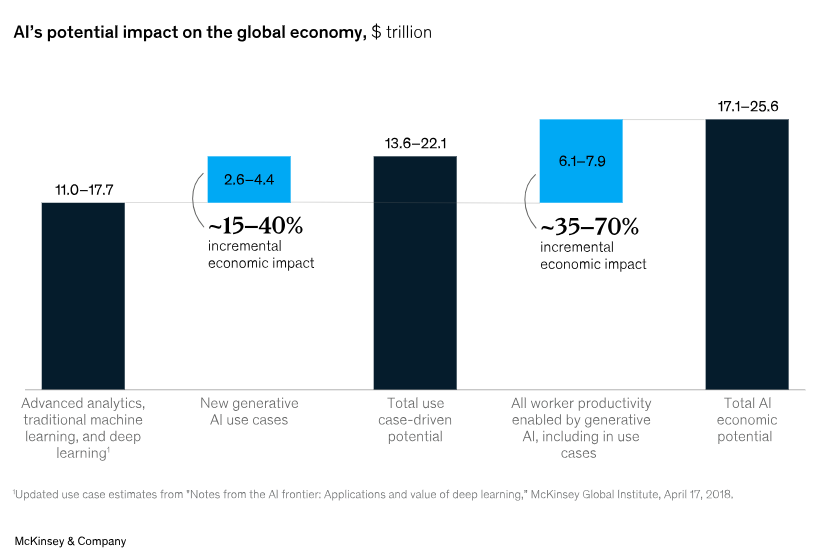
According to McKinsey, Generative AI could add $2.6–$4.4 trillion in value annually across the global economy, with marketing and sales among the biggest winners.
AI can confabulate facts, flatten voices, or introduce bias. It can make everything sound monotonous if you’re not careful. And it raises important questions about disclosure, data privacy, and trust.
This can impact your brand voice, cause customer distrust, result in hidden costs, or even attract legal consequences
So, does that mean you should exclude AI from your workflow? Not at all. That’s like giving your competitors an edge and handing them the trophy.
- Language models power writing assistants, summarizers, and SEO optimizers
- Vision models like AI image generators help create and edit images
- Recommender systems drive personalization and content targeting
Besides, some AI models help content teams stay aligned. An example is Writecream.
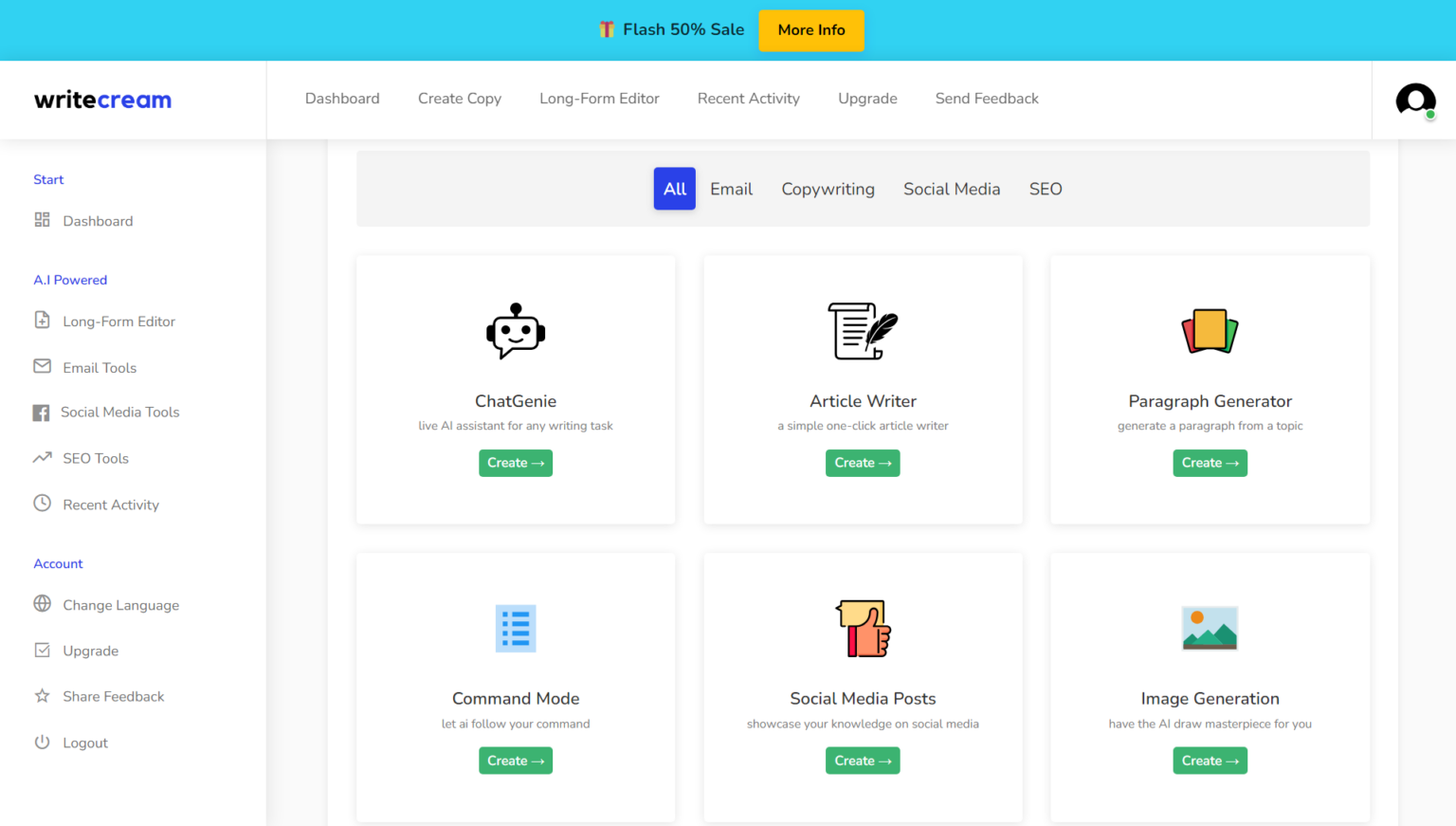
All these functions are essential to your workflow, and even to how search works. Instead of ditching AI, hone your skills to stay on top of the whole process and build proper guardrails around its use.
4 Core Skills You Need As a Modern Content Professional
Here are some of the skills you need to master:
-
Technical Skills and Digital Literacy
No, you don’t need to become a full-time engineer. But developing technical literacy makes you a better strategist and a sharper collaborator.
We asked Ryan Hammill, Executive Director of Ancient Language Institute:
“AI can connect systems and accelerate output, but it does not understand how decisions ripple across teams. You do. Only content professionals who understand how data, workflows, and messaging connect across the business are the ones who prevent costly misalignment before it shows up downstream.”
“So, learn what models do well, where they fail, and why. Pick up a little knowledge of token limits, embeddings, and fine-tuning. That can help you develop good prompts for better content,” Ryan says.
Additionally:
- Get comfortable with data, know how to read dashboards, segment audiences, and interpret experiments. Tools like Tableau or Datawrapper make it easier to tell clear, honest stories with data
- If you’re totally new to how AI works, Google’s free Machine Learning Crash Course is a great place to start. If you’re a bit geeky, you can study OpenAI’s prompt engineering guide
Staying current is part of the job now. Subscribe to a couple of credible newsletters, track product updates for your core tools, and set aside time to test features before they hit your workflow.
-
Adaptability and Continuous Learning
The pace of change in the modern content process won’t slow down to match our calendars. And that can be exhausting. But it’s also empowering when that pushes you to build a new routine around work and improve existing skills.
In a sentence, you need to adapt and keep learning to stay relevant. Here are a few tips that will help:
- Focus on one adjacent skill at a time. For instance, you can choose to hone your analytic skill if you publish interactive content. Or you can choose to divest into UX writing if you work on landing pages or onboarding
- Spend time where practitioners talk to gain unwritten and practical knowledge. You can start by joining small Slack groups or niche forums. Read what people say broke, slowed them down, or produced unexpected results
- Choose certifications that change how you make decisions. Analytics training can help you defend choices with data. Content marketing courses improve planning and measurement. Short AI courses matter when they explain failure cases, bias, and limits, not just features
For efficiency, you should adopt microlearning. 10–20 minutes a day on a course or tutorial helps you avoid pausing midway or getting overwhelmed.
Learning sprints help too, if you’re able to keep up.
- It’s best done in cohorts in order to stay consistent
- Pick a skill like analytics or UX writing and go deep for two weeks
Visit sites like DeepLearning.AI to find quick, self-contained courses that will enhance your AI use and expertise.
-
Creative and Critical Thinking
While algorithms can automate 70 percent of routine tasks according to McKinsey Global Institute, they still lack the ability to notice subtle gaps or emotional shifts that define high-performing content.
For instance, AI-powered UX tools might be able to create the most aesthetically pleasing custom wear design in seconds, but it’s up to you to judge whether the design actually fits your audience, the occasion, and the brand intent.
Adrian Iorga, Founder and President at Stairhopper Movers, where he runs a logistics-heavy business where clear coordination and consistency matter, supports this too.
“You can automate scheduling, routing, and estimates, but you still have to decide how your service is presented. Customers read tone, confidence, and clarity before they ever book. If your message sounds generic or rushed, they assume the work will be the same.”
“The same applies to content. Tools can generate options fast, but someone has to choose what actually represents the brand. That decision is not technical. It comes from experience and understanding how people interpret what they see”, Adrian adds.
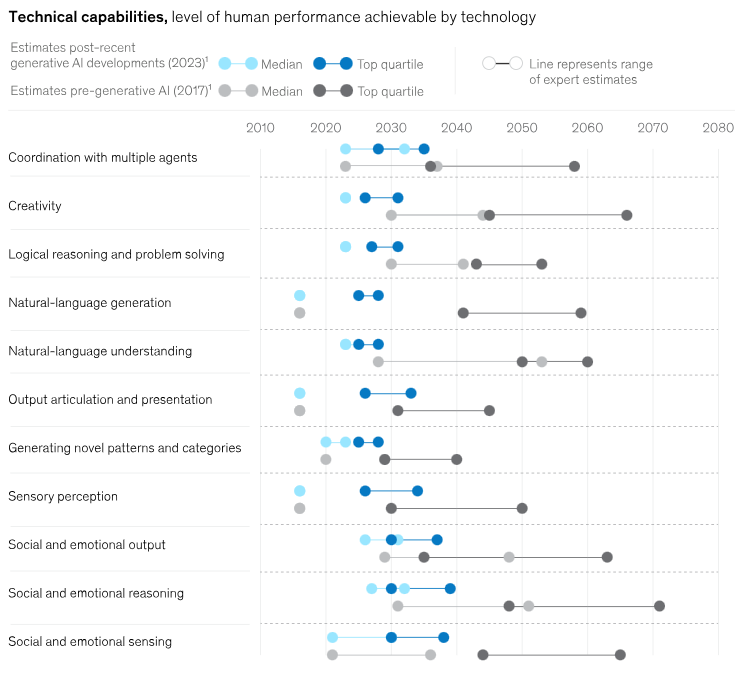
Who knows? Perhaps AI will catch up in a decade, as some estimate. For now, it is far away and should not replace you as the primary brain behind each content run. That’s why critical thinking and creativity should top your list of must-haves.
To master creative and critical thinking:
- Do the thinking throughout the process while allowing AI to assist with output. The less you rely on AI to do the thinking, the more creative you get. The opposite results in creative regression
- Treat AI outputs as drafts from a capable intern, not finished products. Data from Harvard Business School indicates that professionals who use AI for brainstorming see a 40% boost in quality when they actively remix and iterate on the results
- Use prompts to generate dozens of alternative angles or formats for a single idea to see what you might have missed. From there, apply critical analysis to verify every claim against primary sources and remove repetitive robotic patterns
In summary, lean on AI to expand your creative options, but don’t let it become the curator.
-
Communication and Collaboration
Great content teams now include writers, editors, designers, data scientists, engineers, and product folks. And the best work happens when you interact with each of them without jargon getting in the way.
When you don’t? The worst happens.
For instance, imagine you’re the head of content for an online health consultation brand. This is a place where your writers, clinicians, and legal reviewers all touch the same content. So, a single unclear brief, outdated guidelines on AI use for drafting, or poorly documented changes can lead to conflicting medical claims across pages.
This can negatively impact health decisions for patients who follow your website’s medical advice religiously. That’s why communication and collaboration are non-negotiable.
Here’s how to use these two in the AI era:
- Learn to write clear briefs that spell out inputs, outputs, constraints, and success metrics
- Make it a habit to document your AI setups, such as the prompts, style guides, and datasets, so others can replicate and improve them
- Favor async-friendly tools, like Loom, Filestage, or Notion, for feedback so you’re not stuck in meetings all day
- Set translation moments, like demos, show-and-tells, and paired work between creatives and analysts, in your calendar
- Embrace organizing regular sessions where team members can explain their work in simple terms, build mutual understanding, and spark innovative solutions
Most importantly, turn your AI usage and communication steps into a guideline everyone can adopt once on board. This is especially necessary if you work with freelancers or outsource your content production process to a virtual assistant agency or a digital brand specializing in content creation.
Ethical Considerations in AI-Driven Content
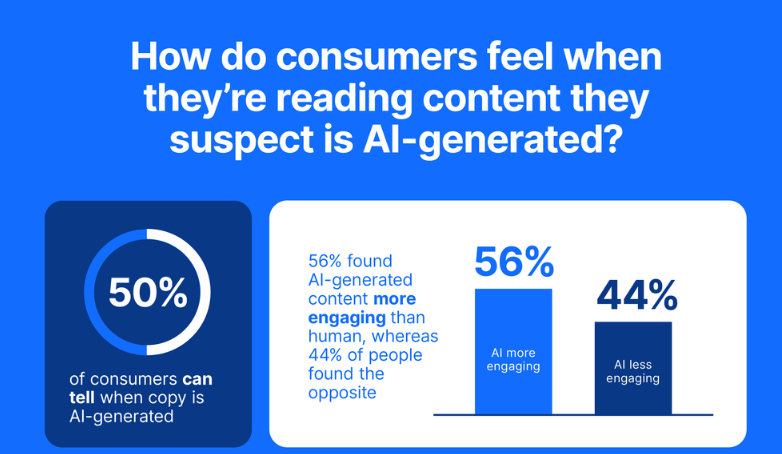
According to Bynder, 50% of your audience is savvy and can tell when content is phoned in or when their data is handled casually.
Ethical guardrails protect your brand and your readers.
- Use plain language to disclose when AI meaningfully contributed to content
- Keep a human in the loop for sensitive topics, claims, and final approvals
- Respect privacy and consent, especially under regulations like the GDPR
- Monitor bias and fairness
The NIST AI Risk Management Framework provides practical guidance for evaluating and mitigating risks. Track emerging rules, such as the EU’s AI Act, which will influence disclosure and governance.
Wrapping Up
The core skills you need in an AI era are still the same as decades ago. You still need to know your audience, tell a compelling story, and earn attention with honest, helpful work. But now, you need to add a working grasp of AI, data literacy, collaborative chops, and a steady learning habit.
The classics, such as storytelling, audience understanding, and SEO, still matter. In fact, AI puts more pressure on those skills because it removes excuses. If drafting is easy, the bar for clarity, originality, and usefulness goes way up.
Be curious. Try new tools. Keep your standards high. And remember that the goal isn’t to sound like a machine that learned your voice. It’s to use machines, so your voice can do its best work.