Most resume advice stops at “make it stronger.”
Stronger verbs. Better metrics. Cleaner summary. Fewer clichés. That’s all useful, but it skips the part that frustrates people most: you can improve the writing and still get nowhere.
A resume can be sharp, polished, and full of relevant experience, but without being optimized as a resume for ATS, it can still fall flat because the first reader isn’t really a reader. It’s software trying to sort job titles, dates, skills, and keywords fast enough to decide whether your application moves forward.
That’s why people end up confused. They know the resume is better than the one they sent six months ago. What they don’t know is whether it’s actually easier to read.
A better-sounding resume can still be a weak application
This is the trap. People assume that if the resume sounds more professional, it must be working harder for them.
Not always.
Say you’re applying for an email marketing role and one of your bullets says, “Improved lifecycle performance across customer campaigns.” That sounds polished enough. The trouble is that it’s also slippery. If the job posting is looking for segmentation, A/B testing, retention, CRM workflows, and HubSpot, that bullet may not give the system much to work with. A quick ATS-friendly resume scan can catch that kind of mismatch before the application goes out, which is a lot better than guessing after two quiet weeks.
A recruiter might understand “How I’ve Created Impact.” Software may not. “Experience” is less interesting, but it rarely causes trouble.
Where good candidates accidentally make their resumes harder to read
The biggest resume mistakes are usually not dramatic. They’re small choices that pile up.
A two-column layout looks neat, but it can scramble reading order in a resume for ATS. A text box around your summary may look tidy, but it can separate that text from the rest of the document in ways you never see. A “skills” graphic with five filled circles beside Python or SQL may look modern, but it doesn’t give the system anything useful to parse.
Then there’s the wording issue. This one shows up everywhere.
A candidate writes, “Collaborated cross-functionally to support strategic initiatives.” It sounds businesslike, but it doesn’t tell anyone much. What kind of initiatives? With whom? What changed because of the work? Which tools or skills were involved?
Now compare that with: “Coordinated launch timelines across product, sales, and customer support for three feature releases, reducing handoff delays and keeping rollout dates on track.” Same person. Same general experience. Much better signal.
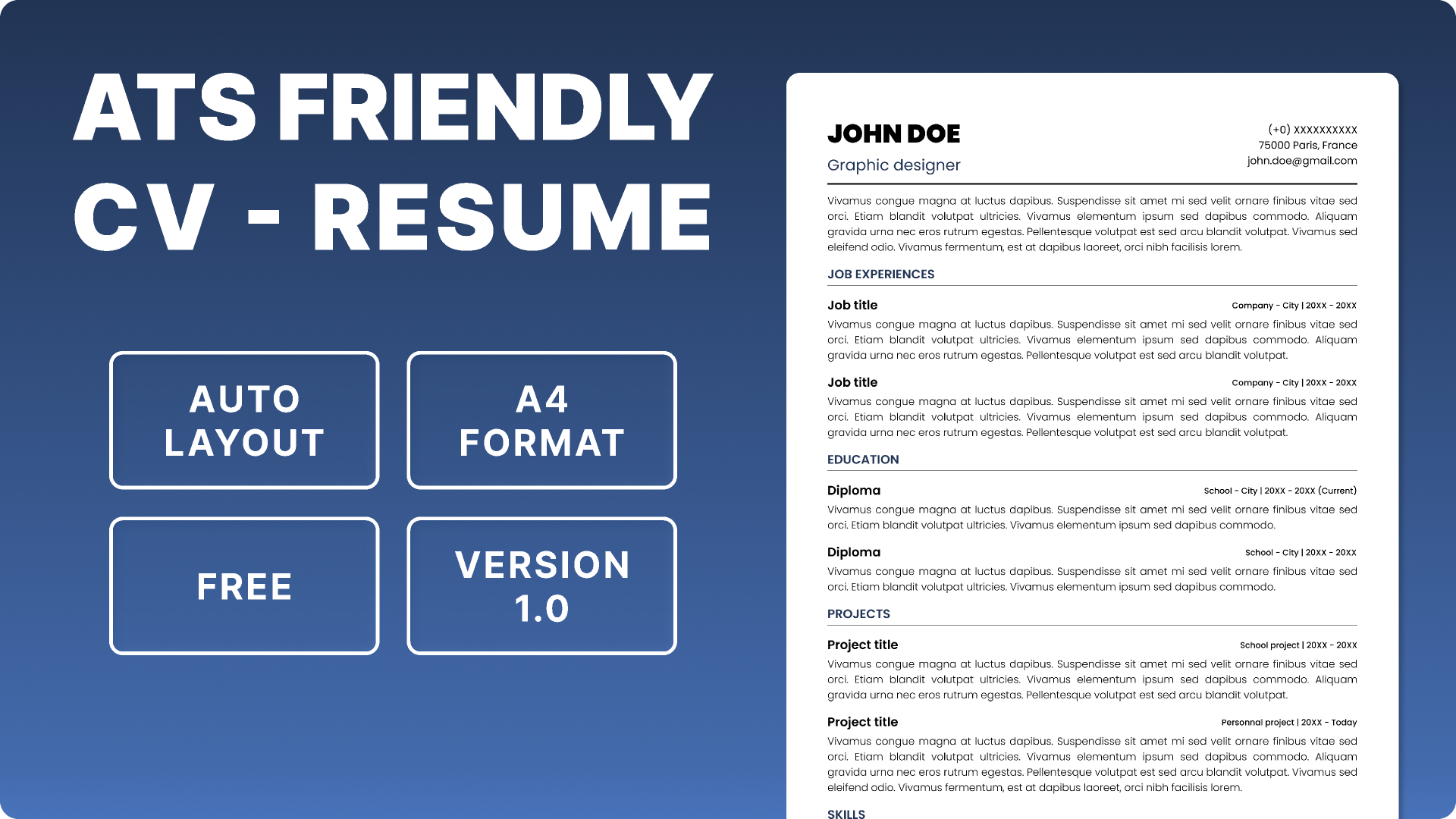
According to Social Security’s ATS-friendly resume advice, pictures, tables, columns, and text boxes can confuse the software, and that matters more than people think. A resume does not need to look plain because plain is stylish. It needs to look plain because plain is easier to read correctly.
This is also why vague strength is not much help when writing a resume for ATS. “Results-driven professional with a proven ability to lead teams and improve outcomes” could describe almost anyone. “Managed eight client accounts, handled renewal prep, and cut response time on escalations from two days to the same day” is less grand, but far more useful.
If you’re editing bullets that feel too broad, Writecream’s ChatGPT Rewriter is more helpful when you use it to tighten and clarify than when you use it to make everything sound fancier. That’s the difference between a resume that reads cleaner and one that just reads louder.
What a stronger ATS-ready bullet actually looks like
The easiest way to improve a resume is not to think in terms of “optimization.” Think in terms of proof.
If a job posting mentions onboarding, account renewals, churn reduction, and QBRs, a weak bullet might say, “Worked closely with customers to improve satisfaction and retention.”
Nothing is technically wrong with that. It’s just too soft.
A stronger bullet would say, “Managed onboarding and quarterly business reviews for 40 SaaS accounts, supporting renewals and reducing churn risk through proactive client outreach.” That sentence does more work because it names the task, the scope, and the context. It gives the system real language to match and gives the recruiter a clearer picture at the same time.
The same fix works in other roles.
A data analyst does not help themselves much with “Created reports for leadership.” Better would be: “Built weekly Tableau and Excel dashboards for senior leadership, tracking conversion, retention, and paid campaign ROI.”
A project coordinator should avoid “Helped teams stay aligned.” Better: “Tracked deadlines, vendor follow-ups, and weekly status updates across a six-person operations team, helping keep launches on schedule.”
A content marketer can do better than “Wrote blogs and managed SEO.” Try: “Planned and wrote SEO articles tied to product pages, refreshed underperforming content, and updated internal links to support higher-intent traffic.”
The point is not to cram keywords in. The point is to stop hiding your experience inside generic language.
This is where people often overdo it when creating a resume for ATS. They copy phrases straight out of the job description until the resume starts sounding stiff and suspicious. That usually backfires. A better approach is to borrow the employer’s terminology only where it honestly matches your work. If the posting says “stakeholder management” and you really did coordinate across teams, say it. If it says “demand generation” and your background is closer to paid social and webinar support, be precise instead of stretching.
That’s one reason Writecream’s resume prompts for AI can be useful. They help you get more role-specific language on the page before you start trimming and tailoring. The value is not in making the resume longer. It’s in getting closer to the terms employers actually use so your background is easier to recognize.
A quick test before you send anything out
You do not need to rewrite your whole resume for every application. You do need a repeatable way to check whether the version you’re sending is doing the job.
A practical review takes about ten minutes:
- Pull out 5 to 8 phrases from the posting that look essential
- Check whether those ideas appear in your summary or recent experience
- Replace broad verbs with more specific ones where you can prove the work
- Remove anything decorative that might interfere with parsing
- Save a clean file version with a normal name
- Read the document once like a recruiter and once like a machine
That last part sounds strange, but it works.
Reading like a recruiter means asking, “Can I tell in one screen why this person fits?” Reading like a machine means asking, “Are the job title, employer, dates, and core skills easy to identify without guessing?”
A simple stress test helps here: paste the resume into a plain text document. If the order breaks, dates drift, bullets collapse, or section headings become unclear, the formatting is probably doing more harm than good. In NIH’s piece on the resume black hole, the point is blunt: resumes often disappear early because ATS filters screen them out before a human gets involved. That’s exactly why fancy formatting is such a risky bet.
It also helps to tailor only where it counts when building a resume for ATS. If a product manager posting asks for roadmap ownership, experimentation, analytics, and cross-functional leadership, you do not need to touch every bullet on the page. You probably need to fix three things: one bullet that proves roadmap work, one that shows collaboration, and one that shows measurable results.
That might look like this:
- Owned quarterly roadmap priorities for onboarding improvements across web and mobile
- Worked with design, engineering, and support to align release timing and rollout plans
- Used funnel analysis and test results to improve activation by 12 percent
That’s enough to sharpen the fit without making the whole resume feel rewritten by committee.
One more thing: don’t confuse ATS readability with stripping away all personality or detail when creating a resume for ATS. Specificity still matters. If you managed a $75,000 monthly ad budget, say that. If you reduced ticket resolution time by 28 percent, put it in. If you onboarded 15 enterprise clients in one quarter, that belongs on the page. Real details help software match terms, but more importantly, they help a recruiter trust what they’re seeing.
Wrap-up takeaway
A lot of resume problems have nothing to do with talent and a lot to do with clarity. If your experience is buried under broad phrasing, awkward formatting, or bullets that never quite get to the point, the system may miss what a recruiter would have understood in seconds. That’s why a resume that feels “better written” can still underperform, especially if it isn’t optimized as a resume for ATS. What usually makes the difference is being more direct, more specific, and easier to scan. Before you send the next application, take one hard look at whether your resume actually says what you did in plain terms.