If you’re creating content right now, AI is already in your workflow.
Someone used it to get past a blank page. Someone used it to rewrite a section that wasn’t landing. Someone ran five headline variations through it because there wasn’t time to think of more.
That part is normal now.
What isn’t settled is what happens after. Who is expected to catch factual errors before it goes out? At what point does AI use need to be disclosed, and who makes that call? If something incorrect gets published, who is responsible for tracing how it got there and fixing it?
Let’s look at how you can establish ground rules for AI content in 2026.
The Current Landscape of AI in Content Creation
McKinsey’s 2024 survey puts regular generative AI usage at 65%, up from 33% the year before. Marketing and sales are leading it because the gains are immediate, faster drafts, iterations, and testing.
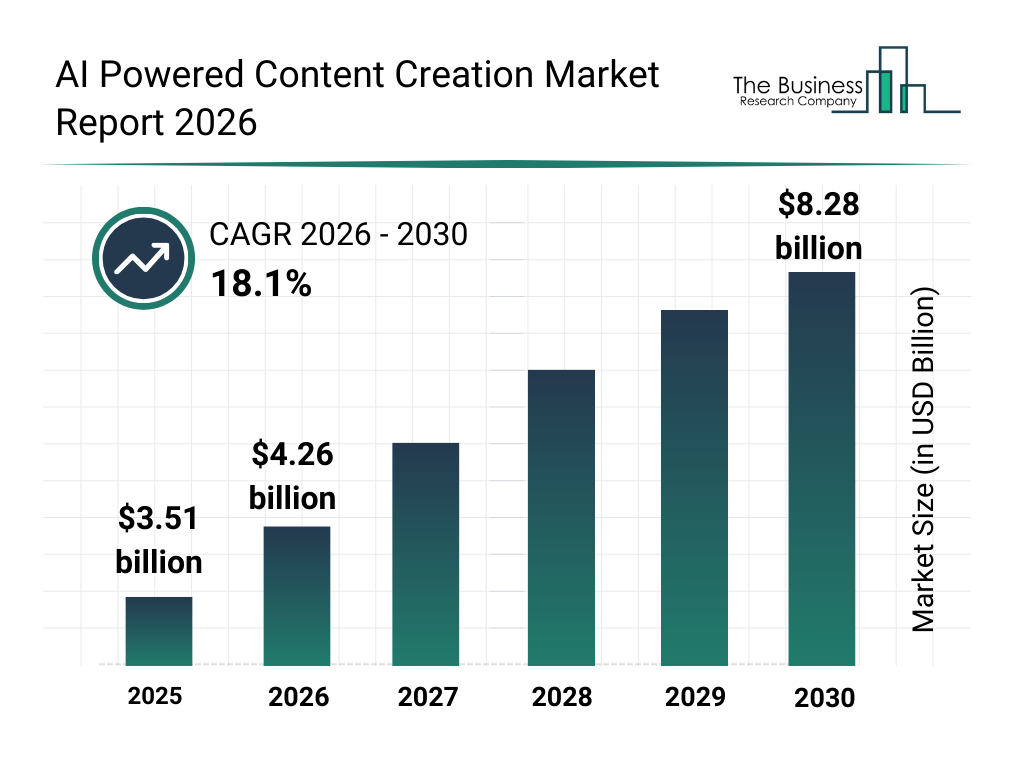
You feel that right away.
You also feel what comes with it.
Content gets shipped faster than it’s reviewed. Edits get layered on top of outputs no one fully owns. The line between gets blurry depending on how rushed the day is.
Gareth Edwards, General Manager at Fox Family Heating & Air Conditioning, runs teams where consistency directly affects outcomes.
He says, “Most issues don’t come from big failures. They come from small steps being done slightly differently each time. One person skips a check, another interprets the process differently, and over time, the results start to drift. The systems that hold up are the ones where expectations are defined clearly enough that no one has to guess.”
At the same time, platforms started tightening things.
YouTube labels synthetic content. Meta updated its policies. The EU AI Act is already forcing transparency in some cases.
So now you’re operating in a setup where:
- Everyone is using AI
- Not everyone is consistent about how
- Expectations are rising anyway
That is where problems show up.
Understanding Transparency in AI Content
AP-NORC data shows people are already wary of AI in news and expect disclosure when it’s used.
You see the same thing in smaller ways, too. The moment something feels off, tone, accuracy, phrasing, people start questioning the whole piece.
And once that doubt kicks in, it’s hard to reverse.
The examples everyone points to: CNET’s AI-written explainers, Sports Illustrated’s fake author profiles, weren’t failures because AI was used. They failed because no one was upfront about it, and errors slipped through.
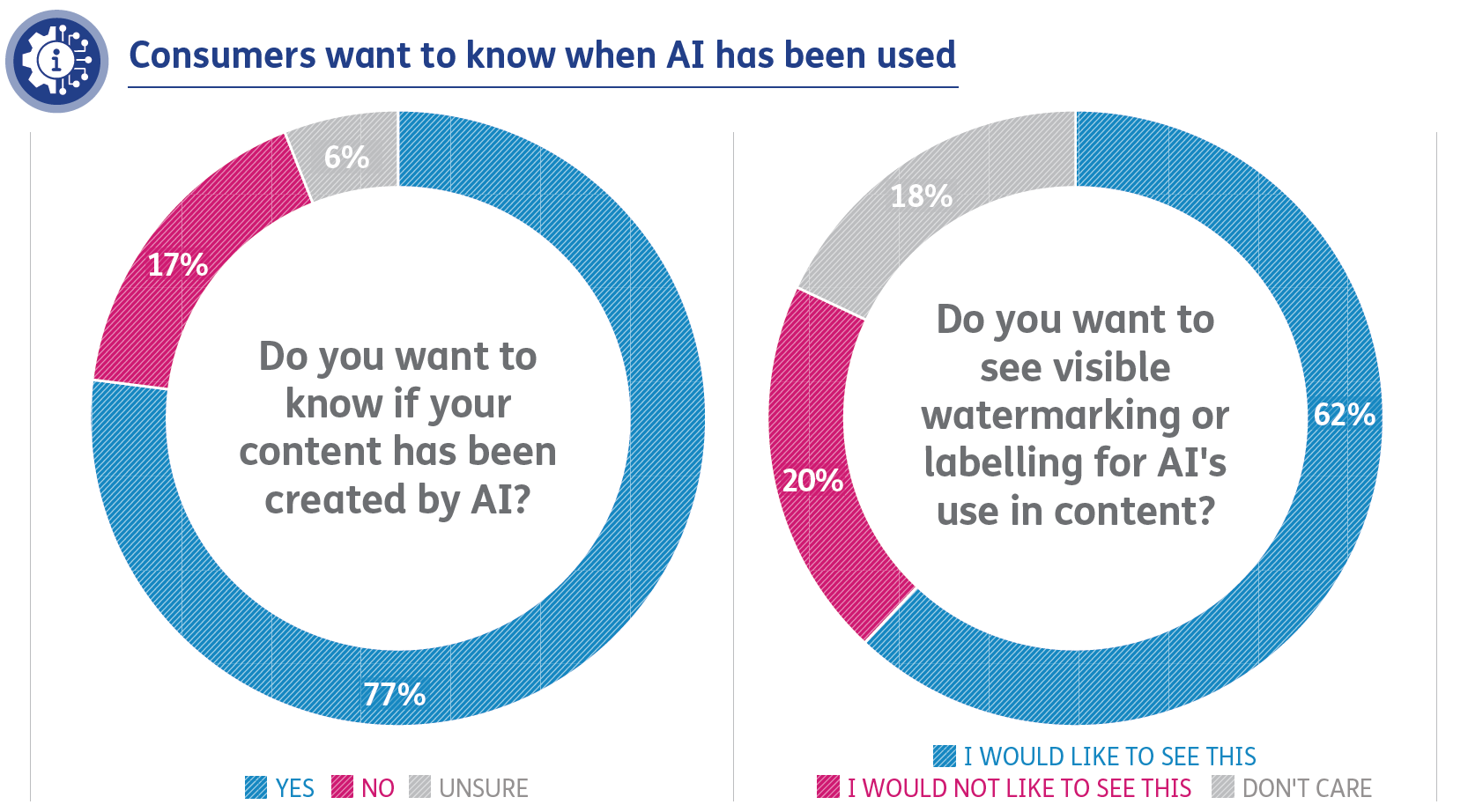
Most teams think transparency means adding a note somewhere. But that sounds more like a disclaimer than an action you take to ensure consistency or your output.
What transparency actually means is deciding, clearly, what you’re willing to stand behind. How far does that accountability actually extend?
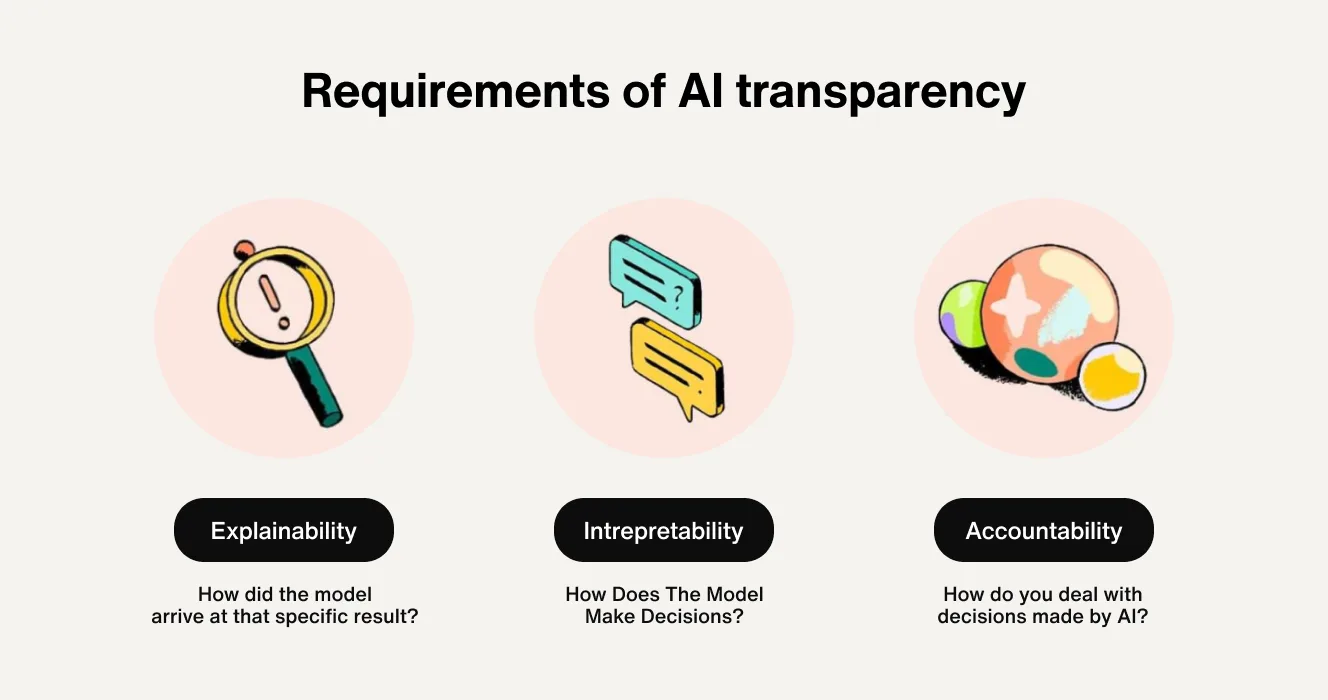
For example, it’s one thing to say a piece was “AI-assisted.” It’s another to define what that means for the final output.
- If a claim is wrong, who owns it?
- If the tone doesn’t match your brand, who’s responsible for catching that?
- If something reads clearly but lacks depth, does that pass, or does it get rewritten?
These aren’t edge cases. They come up constantly because AI can hallucinate, or give you inconsistent output with the wrong prompts.
If you do not set clear parameters for yourself, transparency becomes a label, not a standard.
Most teams treat transparency as a communication layer, something you add after the content is done.
But the real impact shows up earlier.
It shapes how much review is required. What gets checked line by line versus what gets skimmed, and what gets published quickly versus what gets held back.
Once you’ve decided what you’re willing to stand behind, you’ve already defined how much scrutiny the work needs before it goes out. And that makes the rest of the process a lot easier and in line with your brand.
How To Build Trust Through Clear AI Policies
Without a policy, decisions get made in the moment. And those decisions don’t match.
Eric Yohay, CEO and Founder of Outbound Consulting, works closely with teams trying to scale outbound systems where messaging, timing, and iteration speed directly impact results.
He says, “Most teams think inconsistency comes from lack of strategy. It doesn’t. It comes from people making small decisions in isolation. One person tweaks messaging, another skips a step, and suddenly your system isn’t repeatable anymore. The teams that perform best are the ones that remove decision-making from the moment and define it upfront.”
A policy has to answer the following:
- What actually counts as AI use
- Where you draw the line on disclosure
- What requires human review, with no exceptions
- Who signs off when something goes out
This defines where your quality bar actually sits, not what you say it is, but what you enforce.
Make sure your team has checklists, review steps, and examples tied to real work.
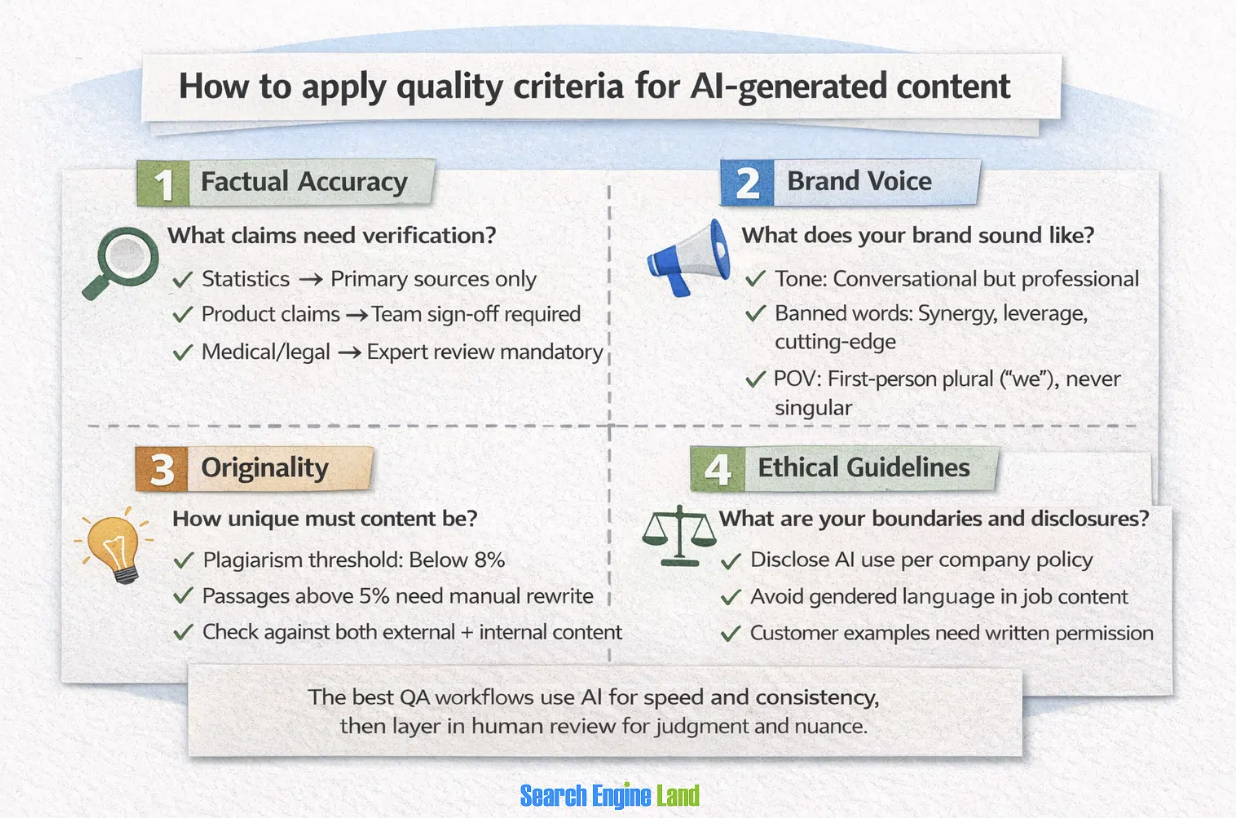
That means every draft goes through the same checks before it moves forward:
- Verify factual claims against primary sources, and review anything in medical or legal categories by someone qualified.
- Check the draft against brand voice to see if the tone matches, the language stays within guidelines, and the point of view is consistent with how the company communicates.
- If sections feel repetitive, templated, or too close to existing content, rewrite before moving ahead.
- Apply ethical boundaries where applicable. Disclose AI use where required, provide real, and avoid using sensitive or internal data without approval.
When a draft doesn’t meet these standards, send it back every time.
Here’s what happens if you don’t do this.
A piece can be factually correct and still not be something you’d want your name on. It can follow the structure, hit the points, and still feel off when you read it closely.
That’s where decisions get inconsistent. There are two scenarios that may happen.
- Some people push it through because it meets the minimum.
- Others send it back because it doesn’t meet the expected level.
Neither decision is unreasonable. But they’re don’t match.
Over time, that gap shows up in the output.
You start seeing content that technically meets the brief but doesn’t feel like it came from the same team. The voice shifts. The depth varies. The bar moves depending on who reviewed it.
This happens when there’s a lack of a shared threshold for what “acceptable” actually means.
Once that threshold drops, the next similar draft doesn’t get questioned, and from that point on, that lower standard becomes the baseline.
What Are the Key Components of Your AI Content Policies?
This is where most documents look complete and still fail in practice. Because they’re technically correct, but not usable.
Disclosure requirements
This needs to be unambiguous. Not “significant use.” Not “as needed.”
Clear.
If AI shaped the output in a meaningful way, drafting, rewriting, and generating visuals, you disclose it. And you say what it did.
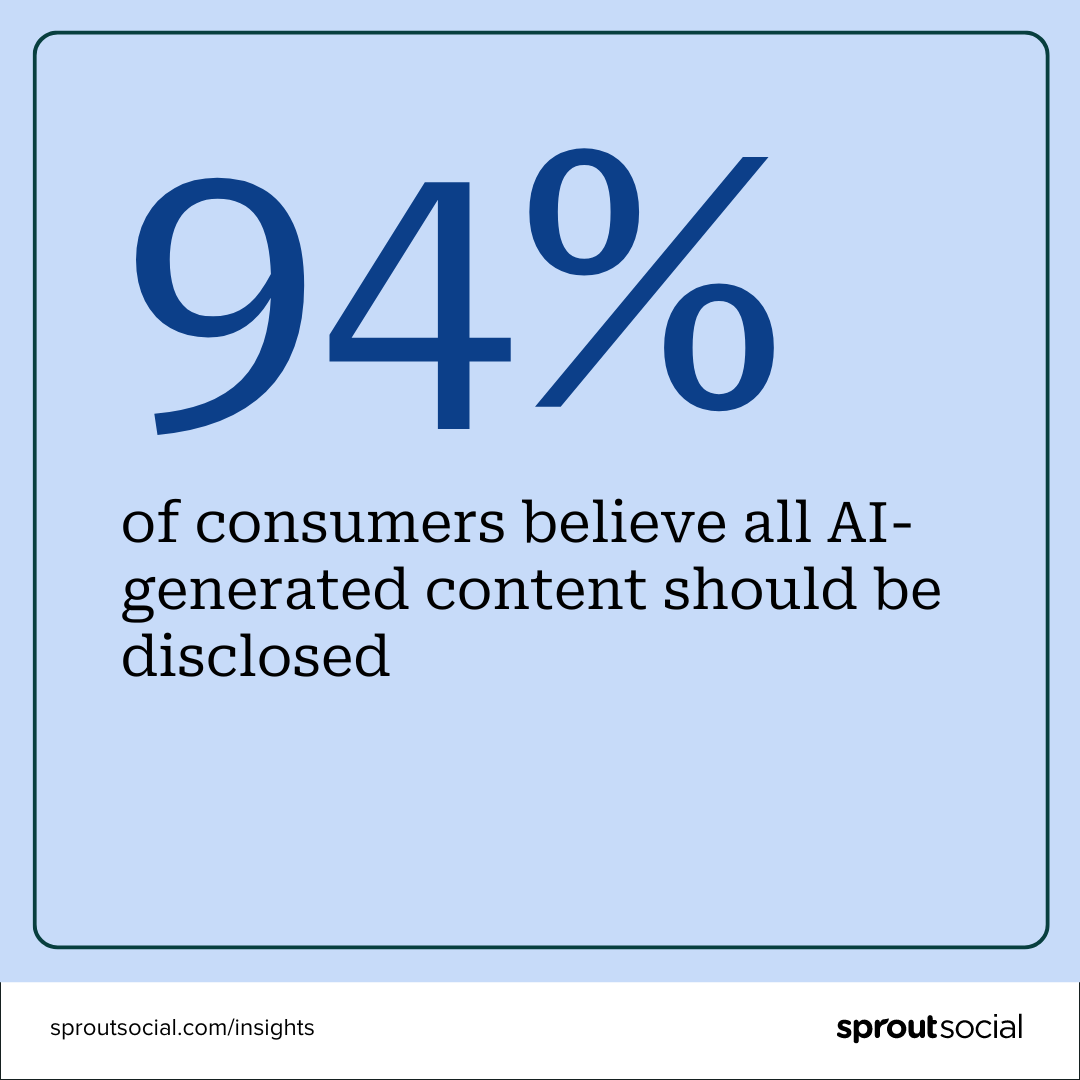
Where you put that disclosure matters just as much.
If someone has to look for it, it might as well not exist.
Ethical guidelines
Most of this is obvious until you’re under pressure. No made-up quotes. No fake experts. No shortcuts that depend on no one noticing.
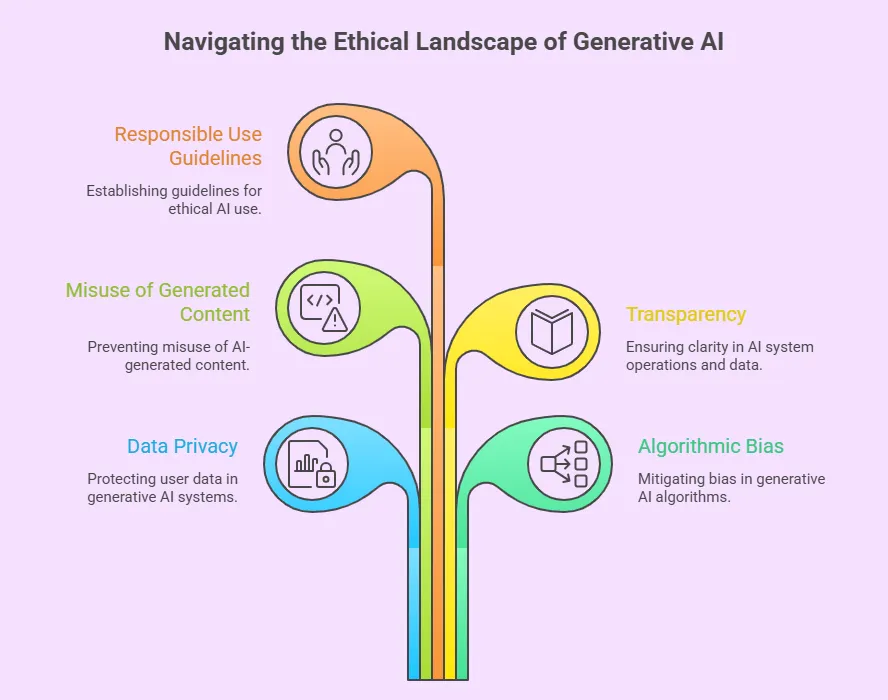
Where teams slip is in edge cases.
- Can we clean this up a bit?
- Can we make this sound more authoritative?
- Can we just generate an example?
That’s usually where the line gets crossed.
In sensitive areas like health, finance, and legal, you don’t rely on AI output without review. Standards like C2PA are starting to matter here, but most teams aren’t there yet.
They’re still figuring out basics.
Data privacy and security
This is less about policy and more about habits. People paste things into tools they shouldn’t.
Customer data, or internal docs. Drafts that weren’t meant to leave the system.
It doesn’t feel risky in the moment. It just feels fast.
That’s exactly where systems break down, when speed replaces structure. You see the same pattern in operational playbooks, like how to build a direct booking site, where the focus isn’t just on setup but on defining what should and shouldn’t happen at each step before execution begins.
Your AI content policy has to interrupt that.
Spell out what can be used. What cannot. No interpretation.
And it has to align with regulations like GDPR and CCPA, whether people think about them daily or not.
Legal and IP safeguards
This is where teams realize they don’t have clear answers.
- Who owns the output?
- What counts as original?
- What happens if something generated turns out to be wrong or infringing?
Most people assume this is handled somewhere else. It usually isn’t.
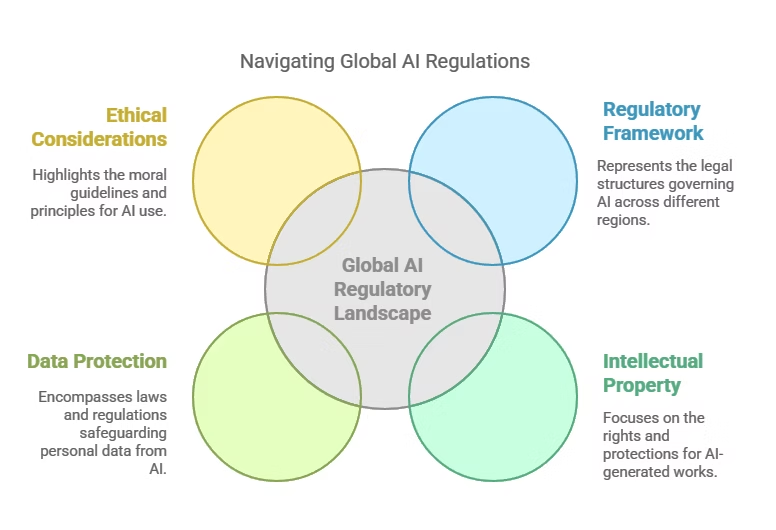
FTC guidance on claims still applies. Copyright rules still apply.
AI doesn’t change that. It just makes the edges harder to see.
Accountability and governance
If no one is clearly responsible, nothing gets enforced.
Conrad Wang, Managing Director of EnableU, operates in a space where trust, compliance, and clarity aren’t optional, especially when working with vulnerable populations and regulated services.
He says, “The biggest risk isn’t that people use AI. It’s that they assume someone else has checked it. In regulated environments, that gap shows up quickly. You need clear ownership, not just guidelines. Otherwise, responsibility becomes invisible.”
Someone has to own the policy. Someone has to review. Someone has to decide what happens when something goes wrong. In practice, this often includes systems like Contraxly Contract Management to track ownership, approvals, and accountability across teams.
Frameworks like NIST or ISO can help structure this.
But the real test is simpler:
When something slips, do you know who is accountable?
If not, the system isn’t set up yet.
Enforcing AI Content Policies
If the policy exists, but it doesn’t fit into how work actually happens, that might be the end of you enforcing your AI content policies.
The teams that make this work don’t roll out a long document and hope for the best.
They start smaller.
- Map where AI is already being used, real workflows, not ideal ones. They identify where mistakes are most likely. Then they build around that.
- Make checklists and examples. Clear “this is okay / this is not.” Things someone can look at mid-task without slowing down.
- Continuous training helps, but only if it’s repeated. Not a one-time session, people forget.
- Monitoring doesn’t need to be heavy. Spot checks, metadata, occasional reviews. Enough to catch patterns. Not enough to slow everything down.
Wade O’Shea, founder of BusCharter.com.au, runs a business where operational clarity matters across bookings, logistics, and customer communication, especially when demand spikes.
He says, “When processes aren’t clearly defined, people fill in the gaps differently. In operations, that shows up as delays. In content, it shows up as an inconsistency. The fix is the same. You don’t leave decisions open if you expect consistent outcomes.”
The goal isn’t perfect compliance.
It’s fewer surprises.
Some organizations have made their policies public.
The Associated Press kept theirs short and direct, human review is mandatory, disclosure is clear, no ambiguity.
WIRED drew a harder line: no AI-generated journalism, limited internal use with disclosure.
Others are experimenting with provenance tools like C2PA to track how content is created and edited.
Moving Forward
AI is already part of how your content gets made.
The question is whether your process can hold up under that.
Be clear about where it’s used. Be strict about what gets reviewed. Don’t leave ownership vague.
Because trust doesn’t come from saying you use AI responsibly.
It comes from whether your process actually proves it.
If drafting speed is becoming a bottleneck, Writecream is worth exploring. It helps you get to a solid first version faster without overcomplicating your process.