


Cold outreach system sounds simple: contact someone you do not know, explain why the message matters, and offer an easy reason to respond. It can create opportunities in sales, recruiting, partnerships, and fundraising. One email is manageable. Writing 500 words that still feel genuinely thoughtful is the real challenge.
Image source: Unsplash
At Writecream, we work on this every day through AI-generated icebreakers, bulk personalization for email marketing, and LinkedIn outreach. Our aim is practical: help teams send messages that feel considered without spending hours researching and rewriting every line.
This guide covers prospect segmentation, flexible templates, use of AI to boost efficiency, campaign automation, deliverability protection, and performance measurement for better results.
Understanding the Power of Personalization
Personalization works because it respects the reader. You took a second to understand who they are and why your note matters right now. That changes how they process it, less like spam and more like someone saying hello.
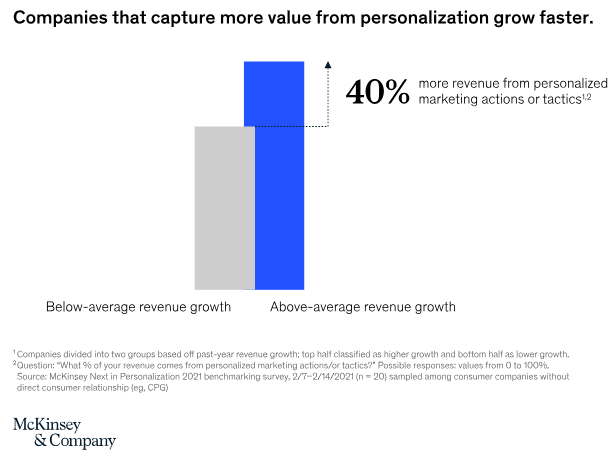
The numbers back this up. Experian’s 2013 Email Market Study found that personalized promotional emails earned 29% higher unique open rates and 41% higher unique click rates than non-personalized emails. McKinsey also found that companies leading in personalization generate 40% more revenue from those efforts than average performers.
What should you personalize first?
- Name, title, and company
- A recent trigger, such as funding, hiring, or a product launch
- One relevant problem or opportunity
- A credible quick win
- A simple next step
That is usually enough. Effective personalized email marketing does not require a biography of every prospect. It requires a few accurate details that make the message timely and specific.
Challenges Of Scaling Personalization
Managing personalized outreach gets more complex as teams handle additional prospects, data sources, and campaign steps. These are the main challenges involved in scaling personalized outreach more successfully:
1. Balancing quality with volume
Traditional outreach tends to split in 2 directions. Teams either handcraft every email and contact only a few dozen people each day, or they rely on a generic mail merge and hope the volume compensates for weak relevance.
The first approach produces stronger messages, but it cannot support a campaign involving hundreds or thousands of prospects.
The second approach increases output but often sacrifices the detail that makes outreach feel relevant.
Scaling effectively requires a process that maintains message quality without demanding hours of manual work for every prospect.
2. Managing fragmented prospect data
Prospect information often sits across CRM systems, spreadsheets, social profiles, enrichment tools, and internal notes. Before an email can feel relevant, those details must be brought together and checked.
Create one source of truth with required fields for every contact:
- Full name and current role
- Company and industry
- Verified email address
- Relevant trigger
- Likely pain point
- Source and date of verification
3. Maintaining flexibility across campaigns
Templates improve speed, but rigid structures make messages repetitive. Different prospects may need different talking points, value propositions, examples, or levels of detail.
Avoid long sentences that carry several claims, benefits, and questions at once. They are harder to scan and easier for automated tools to make awkward. One idea per sentence usually sounds more direct.
4. Coordinating follow-ups and performance tracking
Personalization does not end after the first email is sent. Teams also need relevant follow-ups, accurate engagement tracking, and a reliable way to identify which messages are producing responses.
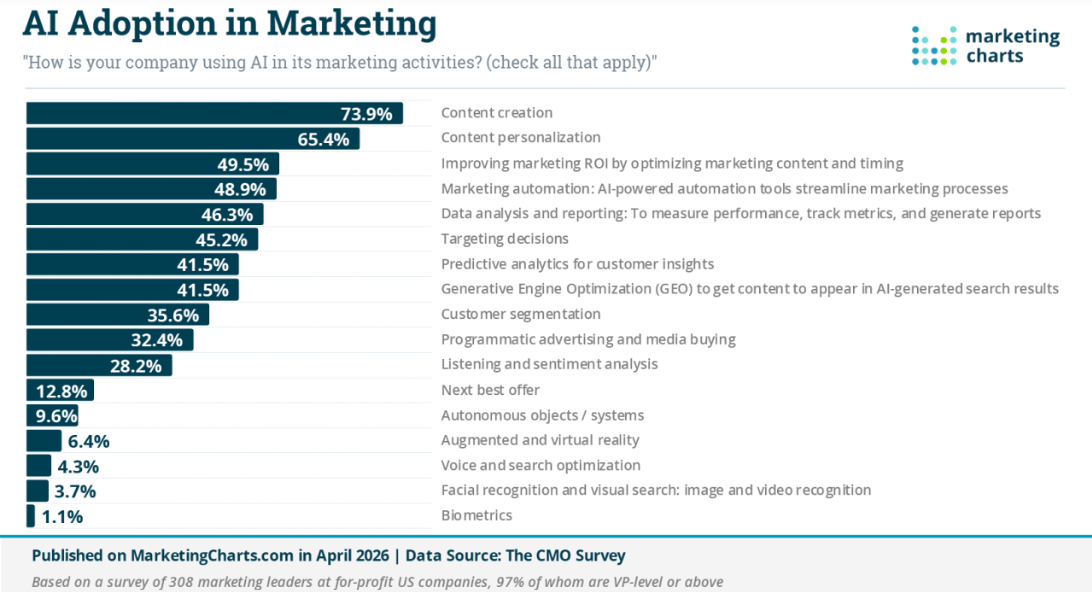
AI is increasingly being used to reduce the manual work involved in monitoring campaign performance. MarketingCharts reports that 46.3% of marketers now use AI for data analysis and reporting, including tracking metrics, measuring performance, and producing reports.
Without a connected process, these tasks create more manual work and make campaign results difficult to interpret.
Scaling personalization therefore requires a complete system for execution, measurement, and continuous improvement, not just a tool for writing emails.
Building Your Cold Outreach System
1. Identify your target segments
Start with clarity. Who are you reaching? What do you want them to do? What value can you offer in the first message?
Segmentation comes before anything else.
At UK SARMS, Director of Business Development Ryan Beattie uses clear audience segments to shape messages around each prospect group:
He says, “You need to know who you’re talking to and what you want them to do before you write a single email. Tight segmentation makes personalization scalable. A message written for a well-defined group already feels personal to everyone in it.”
A business selling custom frames to help customers preserve memorabilia and meaningful milestones will respond to very different messaging than a SaaS company. Tailoring your outreach to reflect those differences makes your emails more relevant and increases the chances of starting a conversation.
For each segment, write down 3 things:
- The problem members are likely facing
- The outcome they care about
- The evidence that supports your offer
2. Crafting a personalized template
Think of your email as a frame with a few tiles you can replace. The frame stays consistent across a segment. The tiles change for each person.
Use placeholders such as {{firstname}}, {{company}}, {{role}}, {{recenttrigger}}, {{painpoint}}, and {{quickwin}}. Each variable should fit grammatically even when the underlying text changes.
Keep subject lines short and specific:
- “Quick idea for {{company}}”
- “Question about {{tool}} at {{company}}”
- “Noticed {{recenttrigger}}”
Open with one personal line tied to a verified trigger. Then state the value clearly, remove jargon, and end with a low-friction question. Ask for a brief reply or a 15-minute conversation, not a large commitment.
Alex Byder, founder of BD Homebuyer, writes conversion-focused emails and understands how strong templates can stay structured without sounding generic.
He says, “A great template doesn’t feel like a template. You write it so the placeholders slot in naturally, and you leave room for a line that speaks directly to the reader. The structure carries the message but still sounds human.”
The strongest templates standardize the parts that do not need to change while preserving space for details that matter to each recipient. This keeps production efficient without making every email sound as though it came from the same automated sequence.
3. Using technology
This is where speed comes from. Combine data enrichment, AI, and smart sending so each email feels personal without the manual work.
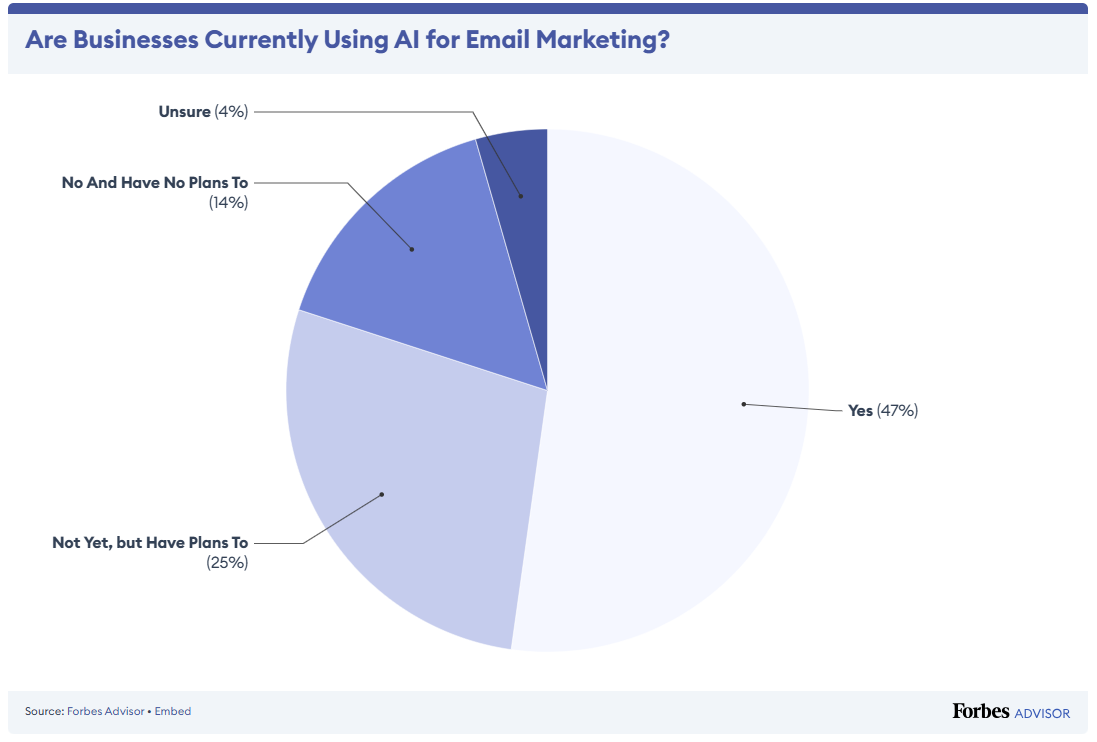
Use enrichment tools to pull reliable titles, technology data, recent news, and hiring signals. Forbes Advisor found that 47% of businesses already use AI for email marketing, while another 25% plan to adopt it. Together, those figures suggest AI-supported workflows are becoming a standard part of campaign execution.
Let AI draft openers and value lines from a prospect’s website, LinkedIn profile, or recent content. Writecream supports this through bulk personalization that connects with reusable templates.
Do not simply switch it on. Train AI with approved examples, clear segment notes, brand language, banned claims, and instructions for handling missing information. Better context reduces generic phrasing and unsupported assumptions.
Automating Your Scaling Process
Once your strategy, template, and inputs are ready, connect everything. The flow: ingest prospects, enrich, personalize, review, send, log, follow up automatically.
Start with a clean spreadsheet or CRM view containing every field the template needs. Use automation to enrich records, fill variables, generate custom lines, and route drafts into the sending platform.
Add guardrails before launch:
- Daily sending limits
- Warmed domains and inboxes
- Randomized schedules
- Bounce handling
- Manual review thresholds
- Automatic sequence stops after replies
Set conditional logic for follow-ups. When someone opens and clicks without replying, send a different angle after 3 days. When a reply arrives, stop the sequence and create a task. When an address bounces, remove it from future sends.
For Bryan Henry, president of PeterMD, connected outreach data provides the evidence needed to make smarter decisions and improve each campaign:
“When your outreach talks to your CRM, every interaction becomes a data point you can learn from,” he points out. “You trigger the right follow-up automatically and refine targeting based on what actually works. The system improves with every send.”
That feedback loop turns automation into more than a time-saving tool. Each response, click, and bounce helps the team sharpen future targeting, timing, and follow-up decisions.
Best Practices For Effective Cold Email Outreach
Effective cold email outreach depends on disciplined testing, careful sequence planning, and responsible sending practices.
Follow these best practices to help your campaigns generate responses while protecting sender reputation:
1. Test timing and message elements
Timing matters, but no universal hour guarantees better results. Midweek mornings can be a practical starting point, although behavior varies by industry, role, and location.
Treat every schedule as a hypothesis. Test one variable at a time, such as the subject line, opener, call to action, or send window. When several elements change together, you cannot tell what caused the result.
2. Keep sequences focused and measured
Cold email sequences should provide enough opportunities for a prospect to respond without becoming repetitive or intrusive. Two to 4 touches over 10 to 14 days often create a reasonable balance between persistence and restraint.
Omer Reiner, founder of Texas Home Buyers, knows that consistent follow-up only works when deliverability, compliance, and customer trust remain protected.
He puts it simply: “Deliverability and compliance protect everything. You test send times and subject lines to see what resonates, and you respect regulations because trust is your most valuable asset. Cut corners and you undo everything you’ve built.”
Each follow-up should add context, introduce another benefit, answer a likely objection, or make the next step easier. Repeating the original message with “just checking in” gives the reader no new reason to reply.
3. Protect deliverability and compliance
Teams sending larger volumes should warm new domains gradually rather than launching full campaigns immediately. Sender identities may also need careful rotation to distribute volume without hiding who is contacting the recipient.
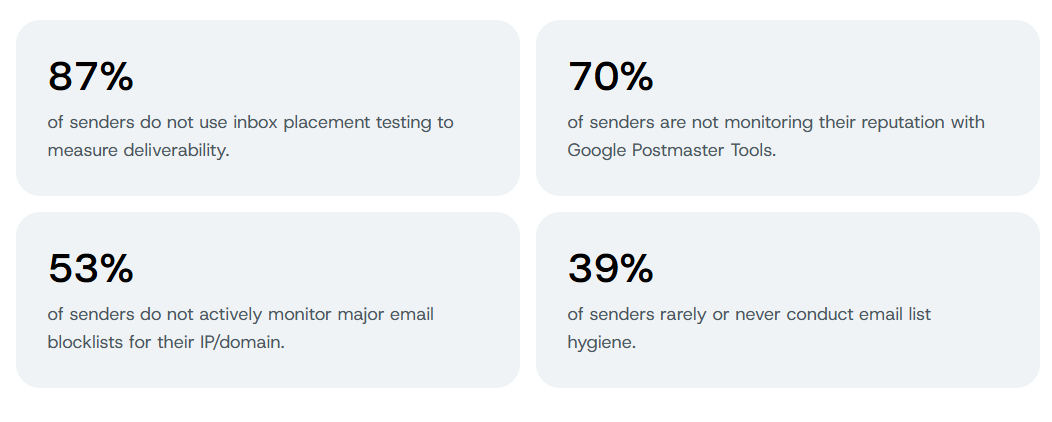
Mailgun’s research shows that many senders are still overlooking core deliverability practices. It found that 87% do not use inbox placement testing, 53% do not actively monitor major blocklists for their IP address or domain, and 39% rarely or never clean their email lists.
Every message must use accurate sender information, truthful headers, and a clear opt-out process. In the United States, review CAN-SPAM guidelines covering identification, opt-outs, and truthful headers before launching any campaign.
Measuring Success and Improving Your Outreach System
What you measure changes how you write. Open rates tell you if subject lines and sender names work. Click-through rates show whether your offer and structure carry people forward. Reply rates are the closest signal that your message is connected. A positive reply rate, meaning how many people say yes or ask for more, shows whether you are creating real opportunities. Track bounces and spam complaints to protect your sending reputation. Watch how each segment performs.
Create a weekly review that answers 4 questions:
- Which segment produced the most positive replies?
- Which trigger led to the strongest conversations?
- Where did prospects stop engaging?
- What single change should be tested next?
Use those answers to refine targeting, adjust messaging, and improve triggers. Borrow what works, but test it before applying it elsewhere. Different audiences often respond to different evidence and ask questions.
Next Steps
Personalizing 500 emails in the time it takes to write one is not magic. It is a system built from clear segments, flexible templates, enriched data, AI-generated lines, reliable automation, and CRM tracking.
Start with one segment and one message. Verify the data, review the first batch manually, and study the replies before increasing volume. Add tools only when they remove a proven bottleneck rather than creating another layer to manage.
For building more personalized email marketing campaigns at scale, try Writecream through a quick demo and see how it fits into your current email workflow.
Join Writecream for FREE!
In just a few clicks and under 30 seconds, generate cold emails, blog articles, LinkedIn messages, YouTube videos, and more.
It's free, forever!
Leave A Comment
Join Writecream for FREE!
In a few clicks and under 30 seconds, generate cold emails, blog articles, LinkedIn messages, YouTube videos, and more — no credit card required.
Start for FREE